Young Jennifer Aniston stepping onto sets with quiet determination and bright eyes changed how we viewed TV stars.
In the early 1990s, Jennifer Aniston was far from a household name. She had appeared in short-lived sitcoms like Molloy and Ferris Bueller, worked as a waitress in New York, and even tried her hand at telemarketing—all while chasing acting dreams rooted in her off-Broadway beginnings. Her father, veteran soap actor John Aniston, had given her a glimpse into the industry, but success remained elusive. Then came 1994 and the role of Rachel Green on Friends.
When a young Aniston first stepped onto the soundstage for the pilot, she carried herself with a quiet determination that belied her relative inexperience. Those bright eyes—warm, expressive, and full of hopeful vulnerability—lit up the set. She wasn’t the loudest voice in the room or the most polished performer among the ensemble. Instead, she brought an authentic relatability that felt refreshingly human. Rachel, the spoiled runaway bride who evolves into a strong, independent woman, mirrored Aniston’s own journey from struggling actress to breakout star. Her performance wasn’t flashy; it was grounded in subtle emotional layers, comedic timing that felt effortless, and a natural charm that made audiences root for her instantly.
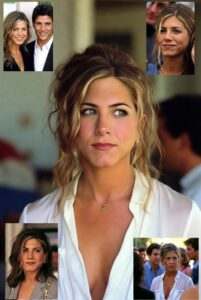
This quiet presence on set marked a subtle shift in how television stars were perceived. Before Friends, many TV actresses were often typecast as either glamorous leading ladies in dramatic soaps or broad comedic sidekicks. They were supporting players in a medium still fighting for prestige against cinema. Aniston’s approach challenged that. She infused Rachel with depth, growth, and everyday messiness—bad hair days, romantic heartbreaks, career pivots from waitress to fashion executive. Her “Rachel haircut” became a cultural phenomenon, but it was her on-screen evolution that truly resonated. Viewers saw not just a character, but a reflection of their own aspirations and imperfections.
Aniston’s bright eyes conveyed optimism amid uncertainty, much like the show’s theme of friendship navigating adulthood. Behind the scenes, her determination shone through. She had auditioned multiple times and nearly lost the role due to scheduling conflicts with another series, yet she committed fully once cast. The chemistry she built with co-stars like David Schwimmer (Ross) created one of television’s most iconic will-they-won’t-they dynamics. That on-set energy—focused, collaborative, and unpretentious—helped elevate Friends from a promising NBC sitcom to a global phenomenon that ran for ten seasons.
Her influence extended beyond the character. Aniston demonstrated that TV stars could achieve movie-star levels of fame without losing approachability. Post-Friends, she transitioned successfully to film while remaining a beloved television figure, later earning acclaim in dramas like The Morning Show. She proved that quiet determination could outshine overt ambition, and bright-eyed authenticity could redefine glamour. No longer did TV actresses need to embody unattainable perfection; they could be flawed, resilient, and deeply human.
In many ways, young Jennifer Aniston’s entrance onto those early sets humanized the entire archetype of the TV star. She showed that stardom could stem from persistence rather than pedigree, from emotional honesty rather than spectacle. Her bright eyes invited viewers in, while her determination inspired a generation of performers to embrace vulnerability on screen. Friends didn’t just launch careers—it reshaped expectations. Television became a platform where relatable stars could dominate cultural conversations, blending humor, heart, and growth in ways that felt intimate and enduring.
Decades later, Aniston’s legacy endures because that young woman stepping onto the set wasn’t chasing fame with noise. She arrived with quiet resolve and sparkling optimism, forever changing how we see the women who light up our living rooms. In an era of polished influencers and instant celebrities, her story reminds us that true impact often begins with steady steps and eyes full of possibility.
Leave a Reply