Why Julia Roberts’ Story Feels More Relevant Now Than in the 90s
In the 1990s, Julia Roberts was the ultimate fantasy: the luminous rom-com queen who lit up Pretty Woman, Notting Hill, and My Best Friend’s Wedding. Her megawatt smile and fairy-tale success represented effortless stardom and happy endings. Today, at 58, her story resonates far more deeply—not because of nostalgia, but because it speaks directly to the struggles and longings of our current moment.
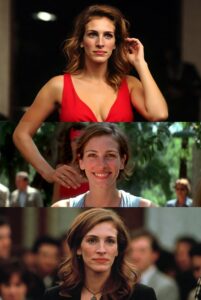
We live in an age of hustle culture, burnout, and relentless visibility. Social media demands constant performance, comparison, and perfection. Against this backdrop, Roberts’ deliberate decision to step back at the peak of her fame feels revolutionary. After Erin Brockovich made her the highest-paid actress in Hollywood, she chose family over frenzy. Marrying Danny Moder in 2002 and raising their three children became her priority. She turned down major projects to be present for school runs, family dinners, and ordinary life. In a world that glorifies “having it all” at breakneck speed, her choice to protect peace and presence feels like radical wisdom.
Her graceful navigation of aging is equally timely. While today’s culture pushes fillers, filters, and eternal youth, Roberts embraces “dignity, humor, and serenity.” She has openly chosen not to pursue heavy cosmetic work so her face can tell an honest story to her children. At the 2026 Golden Globes, her radiant yet natural glow earned a standing ovation. Her message—that beauty deepens rather than fades—offers profound relief to women exhausted by anti-aging pressure.
Roberts’ recent role in Luca Guadagnino’s After the Hunt (2025) further amplifies her relevance. As a Yale philosophy professor confronting moral gray areas, trauma, and complex loyalties, she brings emotional depth and vulnerability that many modern films lack. This shift from charming romantic leads to nuanced, uncomfortable stories mirrors a broader cultural hunger for authenticity over escapism. Audiences are tired of tidy narratives; they crave the messy truths Roberts now explores with quiet power.
Her critique of social media’s cruelty also strikes a chord. Roberts has shared how online comments about her appearance once hurt her, even as a confident adult. In an era of rising anxiety, particularly among young women, her warnings about digital toxicity feel prescient and protective.
Most importantly, Roberts’ story validates the quiet evolution many women seek today. She proves you can slow down without disappearing, set boundaries without losing relevance, and grow more compelling with time. Her selective career—returning for meaningful projects on her own timeline—models sustainable success in an unsustainable industry.
In the 90s, Julia Roberts represented what we dreamed of becoming. Today, she represents what many of us are trying to remember: that a well-lived life matters more than constant output, that authenticity outlasts trends, and that real strength includes knowing when to pause. Her journey feels more vital now because it offers hope—a blueprint for balancing ambition with humanity in a world that desperately needs both.
Leave a Reply