When Julia Roberts appears, the whole world seems to stop and stare in awe
There is a singular moment in cinema when Julia Roberts enters the frame and everything else fades. At 58, she possesses an aura so commanding that screens, red carpets, and rooms seem to pause in collective reverence. In Luca Guadagnino’s After the Hunt (2025), this phenomenon happens repeatedly. As Professor Alma Imhoff, Roberts walks down university hallways, sits in tense faculty meetings, or shares a quiet glance across a table, and the audience instinctively leans in. The world stops. It stares in awe.
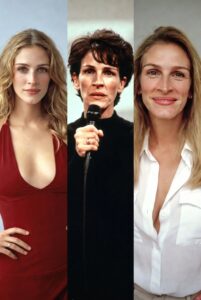
Her entrance in the film is understated yet electrifying. No dramatic score or sweeping camera moves are needed. Just Roberts — tall, poised, with that unmistakable warmth in her eyes — and the atmosphere shifts. As Alma, a brilliant academic whose life begins to unravel under moral scrutiny and personal secrets, she delivers a performance of quiet intensity and profound grace. The Venice Film Festival responded with a lengthy standing ovation, and audiences worldwide have described the same sensation: when Roberts appears, time feels suspended. Her presence fills the space with a rare combination of vulnerability, strength, and timeless allure.
This power traces back to her breakthrough in Pretty Woman (1990), where a single smile and nervous laugh turned a modest romantic comedy into a global event. Decades later, that same magnetic quality has only intensified. In Erin Brockovich (2000), her fiery determination stopped hearts and earned her an Oscar. Today, in After the Hunt, her mature beauty and centered confidence create an even deeper impact. She no longer plays the wide-eyed ingénue; she embodies a woman who has lived, loved, stumbled, and risen. The laugh lines, the thoughtful pauses, the occasional megawatt smile breaking through tension — these elements make her irresistible. Co-stars Ayo Edebiri and Andrew Garfield have spoken about how her on-set presence naturally draws focus, elevating every scene through sheer authenticity.
Off-screen, Roberts’ ability to command attention stems from the same source: unapologetic self-possession. Married to Danny Moder for over two decades, she has built a stable, joyful family life with their three children while protecting their privacy. She embraces aging with dignity and humor, rejecting cosmetic pressures in favor of natural radiance. Gardening at her ranch, sharing family breakfasts, and pursuing meaningful work keep her grounded and luminous. There is no frantic chase for relevance, no manufactured drama — just a woman living fully and honestly. That authenticity creates an almost gravitational pull.
When Julia Roberts appears, the world stops and stares because she represents something increasingly rare: genuine stardom rooted in talent, warmth, and humanity. She doesn’t demand attention; she earns it through depth, resilience, and the courage to remain real. In an age of constant noise and fleeting fame, her enduring ability to captivate feels like a quiet revolution.
Whether on screen in a prestige drama or simply stepping into public view, Roberts reminds us why certain icons transcend eras. Her presence doesn’t shout — it resonates. And in that resonance, millions find themselves pausing, watching, and feeling profoundly moved. At 58, Julia Roberts isn’t just appearing; she is arriving, again and again, with the kind of effortless majesty that makes the whole world catch its breath in awe.
Leave a Reply