What Julia Roberts Really Thinks About the Current State of Celebrity
Julia Roberts has never embraced the full machinery of modern celebrity. In an era of constant visibility, social media scrutiny, and performative outrage, the Oscar-winning actress stands apart as someone who deliberately opts out of the frenzy. Her rare but pointed comments reveal a deep skepticism toward today’s fame culture—one she views as dehumanizing, cruel, and disconnected from genuine human connection.
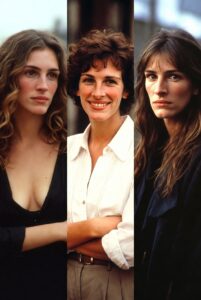
Roberts has long described herself as a “terrible celebrity.” In a candid 2010s conversation, she noted how Los Angeles feeds the “beast” of show business with its endless cycle of photos and articles. Unlike many stars who thrive on exposure, she finds the spotlight exhausting and prefers a quieter life in Malibu with her husband Danny Moder and their three children. Family, she has repeatedly said, is not secondary to her career—it is the priority. This choice reflects her broader critique of a culture that demands celebrities be “always on.”
Her most pointed criticism targets social media. In a widely discussed 2018 interview with Oprah Winfrey, Roberts recounted seeing cruel comments about a casual photo posted by her niece Emma Roberts. Trolls attacked her appearance, aging, and even called her “manly.” Even as a confident woman in her 50s who “knows who she is,” the words hurt. She expressed horror at how such platforms amplify insecurity, especially for young people. “I was amazed at what that made me feel,” she said, highlighting the corrosive effect on mental health and the loss of empathy in online spaces.
Roberts also laments the broader dehumanization of fame today. In a 2014 Wall Street Journal interview, she observed that early in her career, no one scrutinized every outfit or haircut. Now, she said, it has become a “sport.” She resists being defined solely by celebrity status, preferring authenticity over the frenzy of constant analysis.
More recently, while promoting After the Hunt (2025), Roberts addressed the polarized nature of contemporary discourse alongside Sean Penn. She noted the loss of listening and nuance in culture, where conversations quickly turn intense and defensive. Echoing Penn, she suggested that “shame is underrated” in today’s trauma-focused era, advocating for accountability, humility, and genuine dialogue rather than instant cancellation. The film itself explores complex moral gray areas, reflecting her belief that art should provoke thought, not tidy moral binaries.
This philosophy aligns with her selective career. After achieving massive success in the 1990s and early 2000s, Roberts stepped back to raise her family. She returns for projects that matter—Ticket to Paradise, Leave the World Behind, and After the Hunt—but only when she can fully commit. She has turned down roles that would pull her from home life, proving that impact does not require perpetual presence.
In a world obsessed with likes, viral moments, and public personas, Julia Roberts models restraint. She values privacy, real relationships, and the courage to be herself rather than pleasing the crowd. Her views serve as a quiet rebuke to hustle culture and digital toxicity: fame should not consume one’s humanity. By slowing down and protecting her inner world, Roberts has sustained a legendary career while reminding us that true influence often comes from stepping away from the noise.
Leave a Reply