Virginia Giuffre’s Vision Lives On: Survivors Unite in the Fight for Justice
Virginia Roberts Giuffre never saw her own healing as separate from the healing of others who had endured similar horrors. Throughout her public battle against Jeffrey Epstein, Ghislaine Maxwell, and the powerful figures tied to their trafficking network, she repeatedly emphasized one core belief: survivors heal best when they stand together. She often spoke of creating safe spaces where women who had been exploited could share stories without judgment, find solidarity, and reclaim the power that had been stripped from them.
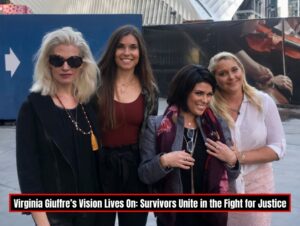
That desire was more than words. Giuffre actively reached out to other survivors, offering encouragement, legal referrals, and emotional support during some of the darkest moments of their lives. She understood the isolation that comes with speaking out—how disbelief, intimidation, and media scrutiny can make a person feel utterly alone. By fostering connections among fellow survivors, she aimed to break that cycle. She believed that collective strength could turn individual pain into a force capable of demanding accountability from institutions and individuals who had long evaded consequences.
In the years following Epstein’s 2019 arrest and Maxwell’s 2022 conviction, that vision began to take tangible shape. Survivors who once navigated their trauma in silence started forming tighter networks. Some joined support groups, others collaborated on advocacy efforts, and a number appeared together at public events or in joint statements. Giuffre’s influence was unmistakable: she modeled vulnerability as strength and showed that speaking in unison could amplify voices that had been dismissed for decades.
After her passing in early 2025, the women she had encouraged refused to let her mission fade. Instead, they channeled their grief into renewed determination. Several survivors who had worked closely with Giuffre or drawn inspiration from her courage now lead coordinated pushes for broader justice. Their goals include pushing for stronger anti-trafficking legislation, improved protections for minors in vulnerable situations, better oversight of elite institutions, and the full unsealing of remaining Epstein-related documents still shielded by court orders.
These women speak openly about the role Giuffre played in their lives. They credit her with giving them permission to name their abusers, to reject shame, and to demand answers rather than accept silence. Public appearances now frequently feature multiple survivors standing side by side—some holding signs bearing Giuffre’s words, others reading from her memoir Nobody’s Girl. Their message is consistent: the fight is not over, and no one should have to face it alone.
The movement they are building reflects Giuffre’s deepest hope—that shared experience could become shared power. Legal advocates report increased cooperation among survivors in ongoing civil suits and criminal referrals. Advocacy organizations have launched initiatives directly inspired by her calls for unity, focusing on survivor-led policy reform and public education about grooming and exploitation.
Virginia Giuffre wanted fellow survivors to spend time together not just to comfort one another, but to organize, strategize, and ultimately change the systems that failed them. Today, that wish is being honored in action. The women she reached out to are no longer isolated voices; they are a growing chorus insisting on justice, accountability, and an end to the culture of impunity that once protected predators. In their unity, Giuffre’s legacy endures—not as a solitary figure, but as the spark that helped ignite a collective demand for truth and reform.
Leave a Reply