Virginia Giuffre’s Tragic Passing Delivers Final, Devastating Hit to Prince Andrew’s Standing
The death of Virginia Giuffre has been widely regarded as the decisive, irreparable blow to Prince Andrew’s already shattered public image. Giuffre, the most prominent accuser in the Jeffrey Epstein scandal who alleged sexual abuse by the former Duke of York, died by suicide in April 2025 at the age of 41 in Western Australia. Her passing has not only closed a painful chapter for her family but also cemented Andrew’s permanent exile from royal life and sealed his reputation as one of the most disgraced figures in modern British monarchy.
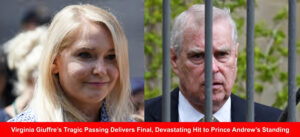
Giuffre’s allegations centered on claims that she was trafficked to Prince Andrew three times when she was 17—once in London at Ghislaine Maxwell’s home, once in New York, and once on Epstein’s private island. A 2001 photograph showing Andrew with his arm around the teenage Giuffre, taken by Maxwell, became an enduring symbol of the controversy. In her posthumous memoir Nobody’s Girl, released months after her death, Giuffre described the encounters in graphic detail, including Andrew’s casual remark that his daughters were “just a little younger” than her after correctly guessing her age. Andrew has steadfastly denied any sexual contact, insisting he has no memory of meeting her and expressing regret only for his friendship with Epstein.
The 2022 civil settlement—reportedly worth millions—ended Giuffre’s lawsuit without any admission of guilt from Andrew, yet the damage was irreversible. Queen Elizabeth II stripped him of his military titles, royal patronages, and the right to use “His Royal Highness” in official settings. His catastrophic 2019 Newsnight interview, filled with awkward defenses and bizarre claims (such as an inability to sweat), turned public opinion decisively against him. King Charles III later reinforced the isolation by ensuring Andrew received no Sovereign Grant funding and remained sidelined from all royal duties.
Giuffre’s suicide amplified the narrative of long-term trauma inflicted by powerful abusers and the relentless pressure survivors face when confronting elite networks. Her family described her as “a fierce warrior” whose courage inspired countless others, but whose private struggles—with estrangement, alleged domestic abuse, and the weight of public scrutiny—ultimately proved overwhelming. Advocates argue that her death underscores the human cost of delayed justice and institutional protection of the privileged.
For Andrew, the loss of his accuser has paradoxically intensified scrutiny rather than quieting it. Commentators note that without Giuffre alive to testify or pursue further action, the focus shifts entirely to the unanswered questions surrounding his conduct, Epstein ties, and alleged misuse of influence. Recent developments—including his 2026 arrest on suspicion of misconduct in public office and probes into claims he sought to discredit Giuffre through police channels—have only deepened the perception of guilt by association.
Royal insiders now describe his situation as hopeless. “There is no rehabilitation possible,” one palace source told The Telegraph. “Giuffre’s death removed any lingering chance of quiet resolution or public forgiveness.” Andrew resides in near-total seclusion at Royal Lodge, Windsor, stripped of his Duke of York title in a voluntary surrender seen as the monarchy’s final act of damage control.
Giuffre’s legacy endures through her advocacy, her memoir, and the broader movement for survivor justice she helped ignite. For Prince Andrew, however, her passing represents the ultimate, unrecoverable wound to his reputation—one that ensures his name will forever be linked to scandal rather than service.
Leave a Reply