Virginia Giuffre’s Ominous Premonition: “I Am Not Suicidal” – A Stark Message to the Powerful
Long before her untimely passing, Virginia Giuffre delivered one of the most haunting statements in the long-running saga surrounding the Jeffrey Epstein scandal. In a candid, emotionally charged television interview, the prominent Epstein survivor stared directly into the lens with unwavering determination and declared, “I am not suicidal.” Those simple yet powerful words would later echo across the internet and fuel intense speculation following her death.
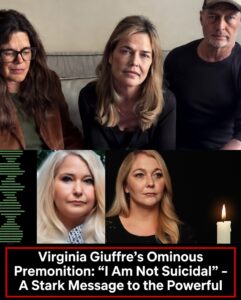
Giuffre, who became one of the most visible and courageous voices against Epstein’s sex-trafficking network, had endured years of trauma, legal battles, and threats. By publicly making this declaration years earlier, she appeared to anticipate the doubts and conspiracy theories that might arise if anything ever happened to her. The statement served as a clear warning to those she had accused—high-profile figures with immense influence and resources—that she had no intention of taking her own life.
In the 2019 interview and accompanying social media posts, Giuffre emphasized her resolve to continue fighting for justice. She explicitly told her audience and loved ones that if harm came to her, it would not be by her own hand. “Too many evil people want to see me quieted,” she reportedly added in related messages. This preemptive message gained renewed attention after her death by suicide was announced in April 2025 at her farm in Western Australia. She was just 41 years old.
Her family confirmed the circumstances surrounding her passing, describing profound emotional and physical pain in her final months, including complications from a serious car accident. Despite official rulings, the resurfaced warning ignited widespread online debate and conspiracy theories. Many pointed to her high-stakes accusations against Epstein, Ghislaine Maxwell, and other influential individuals—including Britain’s Prince Andrew—as possible motives for foul play. Supporters argued that her history of resilience made the official narrative difficult to accept without question.
Giuffre’s journey from a vulnerable teenager recruited at Mar-a-Lago into Epstein’s orbit to a determined advocate for trafficking victims was nothing short of remarkable. She fought tirelessly in courtrooms, shared her story publicly, and helped spark broader accountability efforts that led to Maxwell’s conviction and the release of court documents naming associates. Her posthumous memoir, Nobody’s Girl, further detailed the abuse she suffered and her commitment to helping other survivors.
The chilling nature of her earlier declaration continues to haunt observers. It underscored the immense personal risks faced by those who challenge entrenched power structures. In an era of heightened skepticism toward official explanations—especially following Epstein’s own controversial death in custody—Giuffre’s words serve as a lasting reminder of the dangers whistleblowers can encounter.
While authorities maintained there were no suspicious elements in her passing, the public discourse remains divided. Some view her statement as a tragic foreshadowing of mental health struggles, while others see it as evidence of a larger pattern of silencing inconvenient voices. Regardless of perspective, Virginia Giuffre’s legacy endures as a symbol of bravery in the face of overwhelming odds.
Her message, delivered with such clarity years prior, ensures that conversations about justice, accountability, and the protection of survivors will continue long after her death. In speaking her truth so boldly, Giuffre left behind more than accusations—she left a warning that still resonates powerfully today.
Leave a Reply