Unveiled: The Grim Reality of Epstein’s Private Island – Little St. James as a Center of Exploitation and Secrecy
For years, Jeffrey Epstein’s secluded Caribbean retreat appeared to be nothing more than an exclusive paradise for the ultra-wealthy. In truth, Little St. James served as the central nerve of an alleged operation involving sex trafficking, coercion, and systematic abuse that preyed on vulnerable young women and girls.
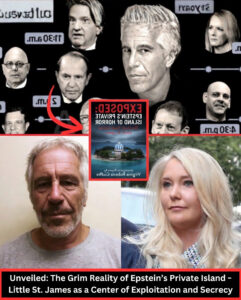
Epstein acquired the roughly 72-acre island in the U.S. Virgin Islands in April 1998 through a shell company for approximately $7.95 million. Located just southeast of St. Thomas, the property — which he affectionately nicknamed “Little St. Jeff” — featured a main residence renovated in luxurious style, guest villas, swimming pools, a helipad, private dock, gym, and multiple beaches. What looked like a tropical haven from the outside became, according to numerous accusations and lawsuits, a remote fortress designed to isolate victims far from help or oversight.
Court filings and survivor testimonies describe how Epstein and his associates allegedly transported underage girls and young women to the island via private jets and helicopters. Once there, victims reportedly had their passports confiscated, faced relentless pressure to engage in sexual acts, and endured repeated abuse. Some accounts detail girls as young as 12 or 13 being coerced into sexual servitude, with the island’s isolation making escape nearly impossible — one victim allegedly attempted to swim away only to be recaptured.
The U.S. Virgin Islands government, in a major civil lawsuit against Epstein’s estate, labeled Little St. James the “perfect hideaway” for an expansive criminal enterprise. Prosecutors alleged that between 2001 and 2019, dozens of minors and young women were trafficked there for sexual exploitation, often under the guise of massages or legitimate employment. Powerful associates were said to have visited, enjoying the luxury while the darker activities unfolded behind closed doors. The remote location, combined with Epstein’s wealth and connections, allowed the alleged crimes to continue for years with little interference.
Survivors have spoken of the psychological terror that accompanied the physical violations. The island’s beauty masked a climate of fear, control, and silence. Hidden cameras, strict security, and a culture of complicity reportedly helped maintain the operation while Epstein cultivated relationships with influential figures from politics, business, and entertainment.
After Epstein’s death in 2019 while awaiting trial on federal sex trafficking charges, the island’s dark legacy came under intense scrutiny. FBI searches followed, and the property — along with neighboring Great St. James, purchased in 2016 — was eventually sold in 2023 to financier Stephen Deckoff for $60 million. The buyer expressed plans to develop a luxury resort, though development has faced delays as of 2026. Part of the sale proceeds helped fund settlements, including a $105 million agreement with the Virgin Islands government to address the harm caused.
Today, Little St. James stands as a chilling symbol of how immense privilege can shield horrific wrongdoing. What was once a private playground for the elite has become a stark reminder of the failures that allowed exploitation to thrive unchecked for so long. The full extent of what happened there continues to surface through released documents, victim testimonies, and ongoing investigations, ensuring that the truth behind the island’s polished exterior is no longer hidden.
The story of Little St. James is not just about one man’s crimes — it reveals deeper questions about power, accountability, and the systems that too often protect the influential at the expense of the vulnerable.
Leave a Reply