The Storage Units the FBI Never Opened: Epstein’s Hidden Computers and Paperwork Raise Disturbing Questions
In August 2009, just weeks after completing his controversial jail sentence for soliciting a minor, Jeffrey Epstein received an email that continues to fuel suspicion years later. His private investigator, Bill Riley of the Riley Kiraly agency, informed Epstein and his legal team that he had removed “computers and paperwork” from Epstein’s Palm Beach mansion before police executed a search warrant back in 2005.
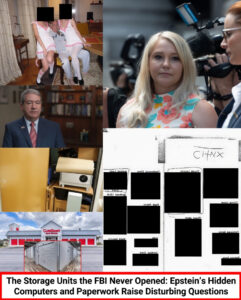
The message was direct and revealing: the items were “locked in storage,” and the hard drives had been cloned by a forensic specialist for safekeeping. Riley sought instructions on what to do with the materials now that the original criminal case had concluded, asking whether they should be returned to Epstein, handed to his attorney Darren Indyke, or handled in another way.
This email, which has surfaced in recently released Justice Department files, paints a troubling picture of deliberate efforts to move potential evidence out of reach before law enforcement could secure it. According to accounts, another private investigator, Paul Lavery, entered the Palm Beach home at the direction of Epstein’s team and removed three computers along with other “items of potential evidentiary value.” Those devices were then turned over to Riley, who managed storage for Epstein.
Reports indicate that Epstein maintained at least six secret storage units across the United States, scattered beyond Palm Beach County. These lockers reportedly held not only computers and documents but also photographs and other materials that authorities may never have examined. Search warrants reviewed in connection with the case do not appear to have included raids on these specific storage facilities, raising serious questions about why such potentially critical evidence was never pursued or recovered by the FBI.
The hard drives were cloned before being placed in storage, meaning duplicates existed — yet it remains unclear what happened to those copies or whether they were ever turned over during subsequent investigations. Despite multiple probes into Epstein’s activities over the following decade, these materials seem to have stayed in private hands, passed between Epstein’s representatives rather than reaching law enforcement.
This episode adds another layer to the long-standing accusations that Epstein benefited from unusual levels of protection and advance warning. The 2005 Palm Beach investigation ended with a lenient plea deal in 2008, and many victims have long argued that key evidence was either overlooked or deliberately shielded. The existence of untouched storage units — potentially containing blackmail material, client lists, or visual records — only deepens public frustration over how thoroughly the full scope of Epstein’s operation was ever investigated.
As new document releases and congressional inquiries continue to examine Epstein’s network, the story of the unopened storage units stands out as a stark symbol of unresolved questions. Why were these items removed ahead of the raid? Why were the storage locations apparently never searched? And what, if anything, remains hidden inside them to this day?
The email from Bill Riley may be more than a routine logistical note — it could represent one of the clearest glimpses yet into how evidence was quietly moved and protected, leaving victims and the public still waiting for complete answers more than 15 years later.
Leave a Reply