The Power of Sharon Stone’s On-Screen Presence
Sharon Stone possesses one of the most commanding on-screen presences in Hollywood history. With her piercing gaze, effortless confidence, and magnetic intensity, she doesn’t just appear in a scene—she dominates it. Her ability to blend glamour, intellect, and raw vulnerability has created unforgettable moments that transcend mere performance, turning characters into cultural icons.
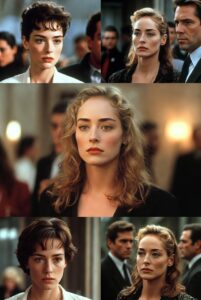
This power became undeniable in Basic Instinct (1992). As Catherine Tramell, Stone exuded dangerous allure and complete control. Her calm demeanor during the infamous interrogation scene, combined with calculated sexuality and sharp intelligence, made audiences question every motive. She didn’t play the femme fatale—she weaponized it. Critics noted how she “singe[d] the screen” with carnal charisma, elevating the film from thriller to phenomenon. Her presence commanded attention even in stillness, proving that true star power lies in subtle authority.
In Casino (1995), Stone delivered perhaps her most layered work as Ginger McKenna. Here, her screen presence shifted from icy control to explosive volatility. She portrayed a woman unraveling under addiction and excess with ferocious honesty—rage, fragility, and seduction all flickering across her face. Holding her own opposite Robert De Niro and Joe Pesci, Stone’s emotional range and physical command earned her a Golden Globe and Oscar nomination. Her ability to convey inner chaos while maintaining glamorous poise highlighted her depth as a performer.
What defines Stone’s presence is the fusion of classic beauty with modern boldness. Her high cheekbones, luminous eyes, and statuesque frame draw the camera, but it’s her intellect that captivates. Often playing women who are smarter than those around them, she brings a knowing quality that suggests hidden layers. This intelligence shines through in her voice—husky, precise, and laced with wit—and her physicality, whether in a deliberate leg cross or a withering stare.
Even in smaller or later roles, her presence elevates material. Whether as a grounded beautician in Bobby (2006), a cunning villain in recent action films, or nuanced characters in independents, Stone commands the frame with lived-in authority. Her post-health-crisis comeback demonstrated resilience that adds gravitas to every appearance.
Stone’s on-screen power stems from authenticity. She channels personal strength, vulnerability, and reinvention into roles that challenge norms. In an industry that often reduces women to archetypes, she consistently subverts expectations, making her characters feel dangerously alive.
Decades later, Sharon Stone’s presence remains potent. It’s not just about beauty or stardom—it’s the rare ability to own the screen through sheer force of personality and craft. She reminds us that true cinematic magnetism comes from within: confidence, courage, and an unapologetic embrace of complexity. Her legacy proves that one powerful presence can redefine how we see women on film.
Leave a Reply