The Moment Julia Roberts Realized Fame Was Never Going to Define Her
In the glittering chaos of early-2000s Hollywood, Julia Roberts stood at a crossroads that would quietly redefine her life. Fresh off massive successes like Erin Brockovich (which earned her an Oscar in 2001) and a string of romantic comedies that made her America’s Sweetheart, she was at the absolute peak of global fame. Yet instead of chasing the next blockbuster, Roberts made a choice that shocked many: she stepped back. The pivotal moment came around 2004, after the birth of her twins Hazel and Phinnaeus with husband Danny Moder. Fame, she realized, would never be the core of who she was.
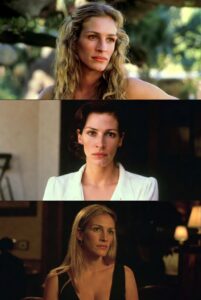
Roberts had already tasted the intoxicating and exhausting side of superstardom. By her late 20s, she was one of the highest-paid actresses in the world, but the relentless spotlight left her feeling unmoored. In candid reflections years later, she described her younger self as “a selfish little brat” prioritizing films above all else. The frenzy surrounding her personal life — broken engagements, tabloid scrutiny — only intensified the pressure. But motherhood changed everything. “It was easy to pause work life to nurture my home life,” she told British Vogue in 2024. Having built her career over 18 intense years before starting a family gave her the rare luxury of choice.
That pause wasn’t a retirement; it was a reclamation. Roberts moved away from the Hollywood grind, raising her three children (including son Henry, born in 2007) with intention and privacy. She has spoken warmly about the deep gratitude she felt for being present — cooking, knitting, driving carpools — experiences many working mothers can only dream of. In that ordinary rhythm of family life, she discovered something profound: her identity wasn’t tied to box-office numbers or red carpets. “The life that I’ve built with my husband and our children… that’s the best stuff,” she shared in a 2022 interview. Fame, she understood, was a companion, not the destination.
This realization didn’t diminish her artistry; it deepened it. When Roberts returned to projects, she chose them selectively — roles with substance over spectacle. Films like August: Osage County, Wonder, and more recently Luca Guadagnino’s After the Hunt (2025) showcase a performer grounded in lived experience rather than hungry for validation. Her performances carry the weight of someone who has prioritized inner peace over external applause.
In interviews, Roberts has emphasized that fame changes perceptions more than it changes the person. She grew up watching her parents struggle in the industry and never let celebrity warp her values. Today, at 58, she speaks proudly not of Oscars or earnings, but of being “a nice person.” She built boundaries early: a home in New Mexico or Malibu far from constant cameras, a commitment to family dinners, and a refusal to chase relevance at the cost of authenticity.
Julia Roberts’ turning point wasn’t dramatic or public. It happened in quiet moments — holding her newborns, stepping away from premieres, choosing presence over pressure. In a town where fame often devours identity, she proved it doesn’t have to. By deciding that family and self would come first, Roberts didn’t just sustain a legendary career; she created a life that feels whole. Fame followed her on her terms, never the other way around. That quiet revolution continues to inspire, showing that true stardom lies in knowing what truly defines you.
Leave a Reply