Sharon Stone’s Return to Hollywood After Years in the Shadows
After dominating Hollywood in the 1990s with unforgettable performances in Basic Instinct, Casino, and The Quick and the Dead, Sharon Stone’s career took a dramatic turn in the early 2000s. What followed was a period of shadows — marked by health struggles, industry ageism, and reduced visibility — before her inspiring return proved that true talent and resilience can never be dimmed for long.
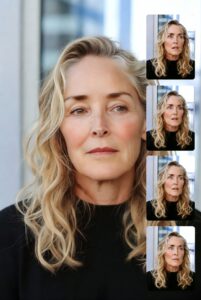
The turning point came in 2001 when Stone suffered a near-fatal subarachnoid hemorrhage and stroke at age 43. Doctors gave her only a 1% chance of survival. She underwent emergency brain surgery and faced a long, difficult recovery involving memory loss, speech difficulties, and partial paralysis. During this time, Hollywood largely moved on. The same industry that had crowned her a sex symbol and top-paid actress in the 90s suddenly offered fewer leading roles. Stone has spoken candidly about feeling abandoned as the focus shifted to younger stars.
For several years, she stepped back from the spotlight to focus on healing and raising her three adopted sons — Roan, Laird, and Quinn — as a single mother. While she continued working, her projects were smaller and less commercial. Appearances in films like Broken Flowers (2005) with Bill Murray and Bobby (2006) showed glimpses of her enduring talent, but they didn’t recapture the massive attention of her earlier blockbusters.
Stone’s true return gained momentum in the 2010s and accelerated in recent years. She earned critical praise and Emmy nominations for her television work, particularly in David E. Kelley’s The Practice and the Netflix series Mosaic (2018). These roles allowed her to showcase a more mature, nuanced side of her acting. In 2019, she appeared in Steven Soderbergh’s The Laundromat alongside Meryl Streep, proving she could still command the screen in ensemble casts.
The publication of her honest memoir The Beauty of Living Twice in 2021 marked a major milestone. The book detailed her stroke, childhood trauma, and personal growth, reintroducing her to a new generation of audiences. Since then, Stone has embraced a steady stream of projects, including independent films, voice work, and high-profile appearances at film festivals like Cannes. She has also become a sought-after speaker and advocate, blending her acting career with humanitarian efforts.
Now in her late sixties, Sharon Stone’s return is not about recapturing 90s superstardom but about authenticity and purpose. She has reinvented herself as an actress who values substance over stardom, choosing roles that reflect wisdom, strength, and complexity. Her journey from the shadows back into the light stands as a powerful example of resilience in an industry that often discards women as they age.
Sharon Stone’s comeback reminds us that Hollywood careers don’t have to follow a straight line. After years of challenges, she has emerged stronger, wiser, and more inspiring than ever — a true survivor who continues to shine on her own terms.
Leave a Reply