Rosanna Arquette’s Stunning Rejection of Virginia Giuffre’s Suicide Verdict Ignites Fresh Doubts Across Epstein’s Web of Mysterious Deaths
In a moment that shattered the official story, actress Rosanna Arquette shook her head with visible disbelief and stated flatly, “I do not — I don’t believe Virginia Giuffre killed herself.” Her blunt declaration has cracked open the carefully maintained narrative surrounding Giuffre’s death, transforming what authorities ruled a suicide into a thunderous wave of suspicion that now echoes every other unexplained death linked to Jeffrey Epstein’s empire.
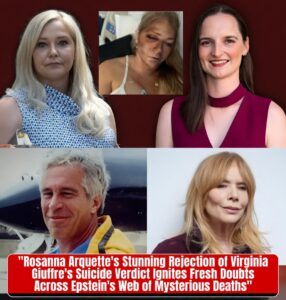
Arquette, known for her outspoken views and long career in Hollywood, made the remarks during a recent podcast appearance discussing survivor advocacy and the lingering questions in the Epstein case. Her tone was calm yet resolute, carrying the weight of someone who has followed the saga closely. The statement instantly went viral, reigniting debates about whether Giuffre — one of the most prominent voices against Epstein, Ghislaine Maxwell, and their powerful associates — truly took her own life in April 2025.
Virginia Giuffre had endured years of trauma, legal battles, and public scrutiny after being trafficked as a teenager. Her courage in naming high-profile figures, including Prince Andrew, made her both a hero to survivors and a threat to the elite. After her death, her family expressed shock and called for deeper investigation, citing her recent advocacy work and plans for future projects. Arquette’s public skepticism has now amplified those doubts, with many asking why a woman who had fought so fiercely would suddenly end her life at a moment when momentum for accountability was building.
This latest challenge to the suicide ruling fits a disturbing pattern. Multiple individuals connected to Epstein’s network have died under circumstances that fuel conspiracy theories: from Epstein himself in 2019 to other witnesses and associates whose deaths were officially attributed to suicide or overdose. Each case has left behind questions about timing, access, and potential motives for silencing voices. Arquette’s comment has brought those parallels back into sharp focus, prompting renewed calls for independent autopsies, full toxicology reports, and the release of any surveillance or communication records from Giuffre’s final days.
Supporters of the official narrative argue that Giuffre had openly struggled with the heavy psychological burden of her experiences, and that dismissing the suicide verdict disrespects mental health realities. However, critics — including Arquette and other voices in entertainment and activism — point to the absence of a public suicide note, inconsistencies in early reporting, and the convenient timing as reasons for continued scrutiny. They argue that in a case involving intelligence ties, billionaires, and international power players, blind trust in institutional conclusions is no longer acceptable.
The ripple effects of Arquette’s statement continue to spread. Online discussions, survivor forums, and independent journalists are revisiting not only Giuffre’s death but the broader list of those who “knew too much.” As pressure mounts on authorities to reopen aspects of the investigation, the question looms larger than ever: how many more deaths linked to this scandal will be accepted without exhaustive examination?
Rosanna Arquette’s refusal to accept the narrative has given fresh oxygen to a movement demanding truth. Whether her words lead to concrete action or simply add to the chorus of suspicion, one thing is undeniable — the official story around Virginia Giuffre’s death no longer feels settled. In the shadow of Epstein’s empire, doubt has become a form of resistance, and the demand for answers grows louder with every voice that refuses to stay silent.
Leave a Reply