Prince Andrew Faces Permanent Exile from Royal Duties Following Virginia Giuffre’s Heartbreaking Passing
The death of Virginia Giuffre has sealed what many royal observers already viewed as inevitable: Prince Andrew has no realistic path to reclaiming any role within the British monarchy. Giuffre, the Epstein survivor who accused the Duke of York of sexual abuse when she was 17, died by suicide in April 2025 at age 41. Her passing has intensified scrutiny on Andrew’s past associations and reinforced the view that his return to public royal life is permanently out of reach.
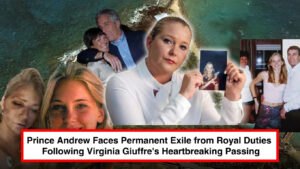
Andrew’s fall from grace began with his longtime friendship with convicted sex offender Jeffrey Epstein. The scandal exploded publicly after Giuffre’s detailed allegations surfaced, claiming she had been trafficked to the prince on multiple occasions in London, New York, and Epstein’s private island. A now-infamous 2001 photograph of Andrew with his arm around a teenage Giuffre—taken by Ghislaine Maxwell—became a defining image of the controversy. Andrew consistently denied any sexual contact or awareness of wrongdoing, but his disastrous 2019 BBC Newsnight interview only deepened the damage, drawing widespread criticism for appearing dismissive and lacking empathy.
The 2021 civil lawsuit filed by Giuffre in New York forced the issue further. Though Andrew settled out of court in 2022 for an undisclosed multimillion-pound sum (widely reported to be around £12 million), the agreement included no admission of liability. Still, the fallout was severe: Queen Elizabeth II stripped him of his military titles, royal patronages, and the right to use “His Royal Highness” in official capacities. He was effectively sidelined from all public royal engagements.
Giuffre’s tragic death has added a layer of finality. In the wake of her passing, her family and supporters have renewed calls for full accountability, pointing to her posthumous memoir Nobody’s Girl as evidence of the enduring trauma she carried. The book details not only the alleged abuse but also her lifelong struggle with the psychological scars, isolation, and public backlash that followed her decision to speak out. Advocates argue that her suicide underscores the devastating human cost of elite impunity and systemic failures to protect victims.
Royal insiders and commentators now describe Andrew’s situation as irreversible. “There is simply no way back,” one senior palace source told The Times. “The combination of the settlement, the stripped honors, and now the tragic death of the principal accuser has cemented his exclusion.” Public sentiment remains overwhelmingly negative, with polls consistently showing strong opposition to any rehabilitation. Even within the royal family, King Charles III has shown no inclination to restore Andrew’s privileges, prioritizing the monarchy’s image and stability amid broader modernization efforts.
Andrew continues to reside at Royal Lodge in Windsor but lives a largely private existence, occasionally seen at family events like funerals or baptisms. Any suggestion of a formal return—whether ceremonial duties, charitable roles, or public appearances—meets immediate resistance from both the public and palace advisors.
Giuffre’s legacy, built on courage and advocacy, has helped shift conversations around survivor justice and elite accountability. For Andrew, however, her death marks the closing of a chapter that began with scandal and ends with permanent exile from the institution he once represented. The door to royal reinstatement appears firmly shut, with little prospect of reopening.
Leave a Reply