Massie Confronts FBI Director Kash Patel in Heated Hearing Over Sealed Epstein Victim Testimonies
During a fiery exchange on Capitol Hill, Rep. Thomas Massie forcefully spotlighted sealed FBI victim interview summaries — officially known as FD-302 forms — as he directly challenged FBI Director Kash Patel. The Kentucky Republican presented sworn statements from survivors that allegedly identify at least 20 influential men to whom Jeffrey Epstein is said to have trafficked underage girls, directly contradicting Patel’s repeated claims that no credible evidence points to anyone beyond Epstein himself.
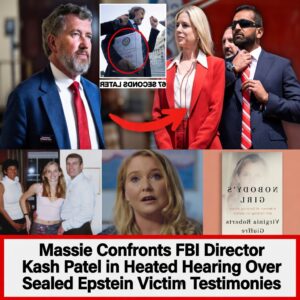
Waving excerpts from the survivors’ accounts, Massie drew attention to serious allegations involving billionaires, a member of royalty, Hollywood producers, bankers, and politicians. These are individuals whose considerable power and status had long protected them from scrutiny in connection with the disgraced financier. Yet Patel stood firm, insisting that previous probes had uncovered no prosecutable evidence against additional parties, effectively keeping the victims’ harrowing experiences locked away behind assertions of insufficient proof.
The tense confrontation unfolded during an oversight hearing before the House Judiciary Committee. Massie, known for his independent streak, pressed the FBI director on why the bureau has not pursued further investigations based on the detailed 302 reports. These internal documents summarize interviews conducted with victims and witnesses during the Epstein investigation and are said to contain specific names and descriptions of alleged abuse involving high-profile figures.
Massie emphasized that the testimonies come directly from survivors who cooperated with federal authorities years ago. He argued that dismissing these accounts as lacking credibility does a profound disservice to the victims who bravely came forward. “We know these people exist in the FBI files you control,” Massie stated, underscoring that the bureau possesses the information but appears reluctant to act on it.
Patel responded by reiterating that he had instructed FBI personnel to conduct a comprehensive review of all Epstein-related materials and to flag any credible leads for potential action. However, he maintained that the evidence reviewed to date has not met the threshold required for additional prosecutions or public disclosures beyond what has already been released.
The clash highlights a growing divide over transparency in the Epstein case. While some officials argue that privacy concerns, legal limitations, and evidentiary standards must be respected, critics like Massie contend that powerful interests continue to benefit from a culture of protection and selective silence. The Kentucky lawmaker’s intervention has reignited calls for the full release of unredacted victim statements and related investigative files.
Survivors’ advocates have welcomed Massie’s persistence, viewing it as a rare stand within Congress to prioritize truth over institutional defensiveness. At the same time, the hearing exposed ongoing frustration with the pace and scope of the FBI’s handling of the matter under Patel’s leadership.
As more details from the sealed 302 forms surface through congressional pressure, the public debate intensifies: Should long-protected names finally face accountability, or will claims of “insufficient evidence” continue to shield the elite? The heated Capitol Hill exchange between Massie and Patel serves as a stark reminder that the Epstein scandal’s full scope remains far from resolved, with victims’ voices still fighting to be fully heard.
Leave a Reply