Julia Roberts just proved that the most compelling stories are still the real ones
In Luca Guadagnino’s After the Hunt (2025), Julia Roberts delivers a performance so grounded and emotionally precise that it feels less like a movie and more like eavesdropping on someone’s actual life. At 58, playing Professor Alma Imhoff — a respected academic whose world fractures under moral scrutiny, hidden truths, and personal regret — Roberts has reminded audiences why authentic storytelling still cuts deepest in an age of spectacle and artifice.
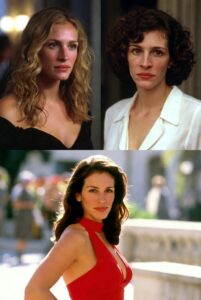
The film does not rely on twists, visual effects, or heightened drama. Instead, it unfolds through quiet hallway conversations, loaded silences, and the subtle unraveling of a woman’s carefully constructed identity. Roberts brings Alma to life with visible maturity: the faint lines around her eyes, the measured cadence of her voice, and the weight of experience behind every glance. There is no attempt to soften or glamorize the character for broader appeal. Alma is brilliant, flawed, defensive, and achingly human — and that honesty is what makes her unforgettable. Critics have called the performance “career-highlight” territory, noting how Roberts channels the kind of emotional realism that only comes from lived perspective.
This commitment to realness mirrors Roberts’ entire career and personal journey. From the joyful vulnerability of Vivian Ward in Pretty Woman (1990) to the fierce determination of Erin Brockovich (2000), she has always excelled at portraying women who feel like they could exist outside the screen. But in recent years, that authenticity has grown even richer. Roberts has spoken openly about embracing aging with “dignity, humor, and serenity,” rejecting the Hollywood pressure to remain frozen in time. She has built a stable, 24-year marriage with Danny Moder and raised three children with deliberate privacy, choosing family breakfasts, gardening, and genuine connection over the manufactured glamour many stars pursue.
In After the Hunt, this real-life grounding infuses every scene. Her chemistry with younger co-stars Ayo Edebiri and Andrew Garfield feels organic rather than forced. The quiet power she brings to moments of moral crisis or personal reckoning resonates because audiences sense it comes from a place of truth. Roberts does not play at being vulnerable — she allows vulnerability to exist without apology or exaggeration. In doing so, she proves that the most compelling stories are the ones that reflect our own messy, complicated lives: the quiet doubts, the hard choices, the search for integrity amid imperfection.
At a time when many films chase escapism through fantasy or nostalgia, Roberts reminds us that cinema’s greatest power lies in recognition. We connect with her work not because it offers flawless heroes or perfect endings, but because it shows strength in struggle, grace in aging, and beauty in honesty. Her selective approach — saying yes only to projects that matter — further reinforces this. She does not chase relevance; she creates it through substance.
Julia Roberts has once again demonstrated that the most magnetic performances and the most enduring careers are built on reality, not reinvention. In After the Hunt and throughout her remarkable journey, she proves that when a great actress brings her full, unfiltered self to the screen, the result isn’t just compelling — it’s unforgettable. The real stories, it turns out, are still the ones that move us most deeply.
Leave a Reply