Julia Roberts Just Delivered a Performance That Feels Like a Masterclass in Restraint
In Luca Guadagnino’s After the Hunt (2025), Julia Roberts gives one of the most commanding performances of her later career — not through explosive outbursts or signature charm, but through masterful restraint. As Alma Imhoff, a poised Yale philosophy professor caught in a volatile moral storm, Roberts holds her power in check, letting silence, micro-expressions, and quiet tension speak volumes. The result is a nuanced portrayal that critics have hailed as superb, magnetic, and quietly devastating.
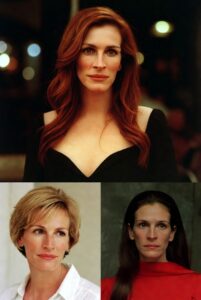
Alma finds herself at the center of a #MeToo-style accusation involving a colleague (Andrew Garfield) and a star student (Ayo Edebiri). What could have been a showcase for dramatic fireworks becomes something far more sophisticated. Roberts plays Alma as a woman who has spent years curating control — intellectually sharp, socially graceful, yet harboring secrets that threaten to unravel her carefully constructed life. She maintains a superb poker face through confrontations, ethical dilemmas, and personal reckonings, only allowing cracks to appear in fleeting glances, tightened jaws, or measured pauses.
This restraint is no accident. Guadagnino and Roberts collaborated to sharpen Alma’s jagged edges without dulling them. The character is neither straightforward hero nor villain; she’s complicated, ambivalent, and human. Roberts trusts the audience to read between the lines. A half-smile carries decades of denial. A carefully controlled breath hints at panic. Even when the mask slips in moments of raw vulnerability, she pulls back quickly, reminding viewers that true emotional depth often lies in what remains unspoken.
The performance stands in elegant contrast to Roberts’ earlier iconic roles. Where Vivian in Pretty Woman radiated open-hearted warmth and Erin Brockovich channeled fiery determination, Alma represents a more mature evolution — a woman who has learned that power sometimes demands composure over catharsis. Her blonde bob, tailored wardrobe, and minimalist presence amplify this sense of controlled elegance. Every gesture feels deliberate, every line delivery layered with subtext.
Co-stars and audiences have taken notice. The film’s ensemble — including Edebiri and Garfield — benefits from Roberts’ steady center, passing emotional intensity like a baton. Viewers describe the experience as riveting precisely because Roberts refuses to overplay. In an era of big, Oscar-baiting monologues, her choice to underplay becomes revolutionary. It’s acting that respects the intelligence of the camera and the audience alike.
After the Hunt may have divided critics on its broader execution, but nearly all agree on one thing: Julia Roberts delivers a masterclass here. She proves once again that vulnerability, when filtered through discipline and restraint, becomes something profound. At 58, she continues redefining what screen acting can look like — not louder, but deeper; not flashier, but truer.
In Alma Imhoff, Roberts doesn’t just act — she observes, withholds, and reveals with surgical precision. It’s the kind of performance that lingers long after the credits, a testament to an actress who knows that sometimes the most powerful thing you can do on screen is hold back.
Leave a Reply