Julia Roberts Is Rewriting the Rules of What a Leading Lady Can Be After 50
At 58, Julia Roberts is not merely surviving in Hollywood’s youth-obsessed landscape — she is thriving as a leading lady on her own terms. While many actresses over 50 are pushed toward supporting roles or sidelined entirely, Roberts continues to command center stage in complex, prestige dramas. With her standout performance in Luca Guadagnino’s After the Hunt (2025), she is actively rewriting the script for what a woman over 50 can embody on screen: intellectual depth, moral complexity, sexual agency, and unapologetic authority.
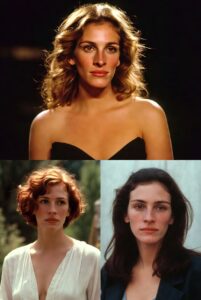
In After the Hunt, Roberts plays Alma Imhoff, a Yale philosophy professor entangled in a campus scandal that forces her to confront her own hidden past. The role is layered and unflinching — far from the charming romantic leads of her earlier career. She shares the screen as an equal with younger stars Ayo Edebiri and Andrew Garfield, anchoring the film with quiet intensity and emotional nuance that only decades of lived experience can deliver. Critics have hailed her as the “monumental center” of the movie, proving she doesn’t need to look 30 to drive a major narrative.
Roberts’ post-50 renaissance builds on deliberate choices. After Erin Brockovich made her an Oscar winner at 33, she stepped back to raise her children, returning selectively for projects that matter. Films like August: Osage County, Wonder, and now After the Hunt showcase a performer who has grown into her power rather than clinging to her ingénue image. She headlines stories about mature women navigating power, regret, desire, and reinvention — themes rarely centered on actresses her age.
Central to her revolution is her refusal to alter her appearance for relevance. Roberts has famously rejected Botox and fillers, choosing instead to age with “dignity, humor, and serenity.” Her face, with its natural laugh lines and expressive eyes, has become part of her strength. She wants her children — and audiences — to see real emotions, not a frozen mask. This authenticity allows her to portray flawed, fascinating women with a credibility that manufactured youth cannot match.
Off-screen, she models the same independence. A stable 20-plus-year marriage to Danny Moder, a close relationship with her now-adult children, and a life split between California and New Mexico keep her grounded. She speaks openly about this chapter as one of clarity and freedom — no longer chasing relevance, but choosing substance. In interviews, she emphasizes that her worth isn’t measured by box-office numbers or red-carpet perfection, but by the richness of her inner life.
By leading prestige projects in her late 50s, Roberts is expanding possibilities for an entire generation of actresses. She proves that leading ladies after 50 can be intellectually formidable, romantically viable, and dramatically compelling without conforming to outdated ideals. Her success challenges studios to invest in mature female stories and reminds audiences that the most compelling characters often come with lived wisdom.
Julia Roberts isn’t asking for permission to remain a leading lady. She is simply taking the role — fully, powerfully, and on her own radiant terms. In doing so, she isn’t just extending her own legendary career; she is redefining the future for every woman who refuses to disappear after 50.
Leave a Reply