Julia Roberts is Choosing Roles That Challenge Everything We Expect From Her
For more than three decades, Julia Roberts defined a certain kind of cinematic comfort. She was America’s Sweetheart: the megawatt smile in Pretty Woman, the charming romantic lead in Notting Hill and My Best Friend’s Wedding, and the triumphant underdog in Erin Brockovich. Audiences knew what to expect—warmth, wit, and happy endings. At 58, however, Roberts is deliberately dismantling those expectations, selecting roles that are darker, morally ambiguous, and emotionally demanding. Her latest performance in Luca Guadagnino’s After the Hunt (2025) marks the boldest chapter in this evolution.
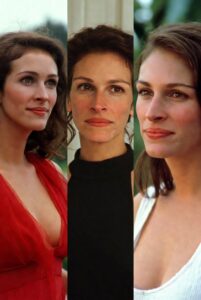
In the psychological thriller, Roberts plays Alma Imhoff, a respected Yale philosophy professor navigating a campus sexual assault accusation. A star student (Ayo Edebiri) accuses one of Alma’s colleagues (Andrew Garfield) of misconduct, pulling the professor into a vortex of loyalty, doubt, and personal reckoning. As the story unfolds, Alma’s own buried trauma surfaces, forcing her to confront hypocrisy, denial, and the limits of empathy. The role requires Roberts to portray emotional guardedness, moral ambivalence, and raw vulnerability—traits far removed from her signature likable heroines. Critics have noted her “tight smile” and brittle intensity, praising how she anchors Guadagnino’s stylish exploration of discomfort and gray areas.
This choice is no accident. After stepping back in the 2000s to raise her three children with husband Danny Moder, Roberts returned selectively with films like Eat Pray Love, Wonder, and Ticket to Paradise. Those projects still carried elements of warmth. After the Hunt, however, dives into #MeToo complexities, power dynamics, and personal secrets without offering easy resolutions. The film’s tagline—“Not everything is supposed to make you comfortable”—mirrors Roberts’ current artistic philosophy. She has said she’s drawn to characters she cannot easily like, hate, or fully understand, seeking roles that challenge both her and the audience.
This shift challenges Hollywood’s expectations as much as the public’s. Actresses in their late 50s often face pressure to play safe or fade into supporting parts. Roberts, instead, headlines provocative prestige cinema on her own timeline. Her selective approach—only committing when she can fully invest—allows her to bring lived wisdom and authenticity to complex material. The standing ovation she received at the 2026 Golden Globes felt like recognition not just of past achievements but of this fearless new chapter.
By embracing discomfort, Roberts reminds us that great acting—and great careers—grow through risk. She is no longer content to be the charming romantic; she wants to provoke thought, expose contradictions, and explore the messy truths of human behavior. In doing so, she redefines what a Hollywood legend can be in the later stages of a career: still luminous, but now profoundly layered.
Julia Roberts continues to surprise because she refuses to be predictable. Her latest roles prove that true star power lies not in repeating what worked before, but in daring to challenge everything we thought we knew about her. At an age when many coast, she is evolving—and inviting us to evolve with her.
Leave a Reply