Julia Roberts Is Aging in a Way That Feels Like Quiet Defiance Against the Industry
At 58, Julia Roberts continues to radiate on red carpets and screens not by fighting time, but by embracing it. In an industry that often demands women freeze their faces and bodies to remain viable, her choice to age naturally stands as a subtle yet powerful act of rebellion. No fillers, no facelifts, no frantic pursuit of eternal youth—just grace, laughter, and authenticity. This approach isn’t loud activism; it’s lived defiance that challenges Hollywood’s narrow beauty standards from within.
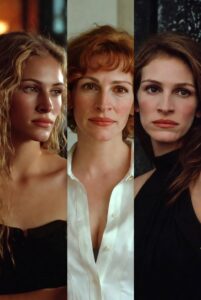
Roberts has been candid about her philosophy. “I’m aging with dignity, humor, and serenity,” she has shared in recent reflections. “I don’t resort to lifting or Botox, and I know by Hollywood standards I’m risking my career. If they don’t want to give me a role because I look my age, I’ll produce the project myself.” This mindset echoes her long-standing views: faces should tell stories, not document trips to the doctor’s office. She once noted that she wants her children to see real emotions on her face—joy, anger, confusion—rather than a frozen mask.
Her recent appearances underscore this quiet power. At the 2026 Golden Globes, Roberts turned heads with a radiant, effortless glow that sparked “age-defying” headlines, yet she achieved it without surgical intervention. Fans and critics alike praised her luminous skin and confident presence, proving vitality doesn’t require alteration. Even amid occasional online criticism about looking “older,” she remains unapologetic, reminding detractors that getting older is not a crime.
This defiance traces back years. Roberts has long prioritized family and inner peace over industry pressure. After becoming a mother, she stepped back from the spotlight, choosing presence in everyday life—breakfast conversations, carpools, and simple joys—over constant reinvention. That grounded existence now infuses her work with deeper resonance. In Luca Guadagnino’s After the Hunt (2025), she delivered a standout performance as a complex Yale professor, earning acclaim for emotional depth rather than youthful allure. The role, opposite younger co-stars, highlighted her as a magnetic lead who anchors stories with lived wisdom.
What makes Roberts’ approach revolutionary is its normalcy. She wants to age like “ordinary women,” wrinkles and all, finding beauty in authenticity amid a culture obsessed with perfection. In interviews, she contrasts Hollywood’s superficial concerns with the real struggles of mothers everywhere—those she truly admires for their resilience. Her value, she insists, lies in character, not appearance.
In doing so, Roberts carves space for a more humane industry. She proves that women over 50 can headline prestige projects, draw audiences, and command respect without conforming to impossible ideals. Her smile—once the hallmark of romantic comedy—now carries the warmth of experience, drawing viewers in through genuine connection rather than manufactured perfection.
Julia Roberts’ aging isn’t resistance for show; it’s a gentle refusal to let Hollywood dictate her worth. By choosing serenity over surgery and substance over spectacle, she defies an industry that too often discards women as they mature. In her quiet way, she’s not just growing older—she’s redefining what strength and beauty look like on screen and beyond. At 58, she remains a beacon that true stardom endures when you age on your own terms.
Leave a Reply