Jennifer Aniston in her earliest roles displayed a magnetic youthfulness that made audiences instantly root for her.
Before she became a global icon and the undisputed queen of the “Friends” couch, Jennifer Aniston spent several years in small, often forgettable television roles that most casual fans have never seen. Yet even in those earliest appearances — from guest spots on Quantum Leap and Herman’s Head to her short-lived turn as Jeannie Bueller in the 1990 series Ferris Bueller’s Day Off — Aniston displayed a magnetic youthfulness that made audiences instantly root for her. There was something irresistibly fresh and alive about her presence that transcended the limited screen time she was given.
At just twenty or twenty-one years old, Aniston brought an energetic lightness to every scene. Her face still carried the soft roundness of youth, her eyes sparkled with genuine curiosity, and her smile arrived quickly and warmly, as though she were sharing an inside joke with the viewer. Unlike many young actresses who tried to appear more sophisticated or worldly than their years, Aniston leaned fully into her natural youthful energy. She moved with an easy, bouncy grace and delivered lines with a bright, unforced enthusiasm that felt refreshing and honest.
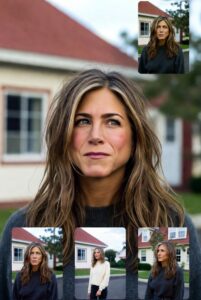
What made this magnetic youthfulness so powerful was its emotional accessibility. In her early roles, Aniston had a way of making her characters feel like someone you wanted to succeed — not because they were perfect, but because they seemed real. She played young women who were slightly awkward, hopeful, and eager to figure life out. That combination created an immediate connection. Viewers didn’t just watch her perform; they found themselves emotionally invested, silently cheering her on even when the shows themselves were struggling to find an audience.
This quality was especially noticeable in her portrayal of Jeannie Bueller. Though the series lasted only a few months, Aniston’s performance stood out for its blend of teenage sass and underlying sweetness. She brought a relatable vulnerability to the role of the overprotective sister, mixing eye-rolls and sharp comebacks with moments of genuine care. Audiences could sense that beneath the youthful bravado was a young actress who was still finding her footing — and that honesty made her all the more endearing.
Even in tiny guest appearances, Aniston’s magnetic youthfulness shone through. She had an innate ability to light up the screen with nothing more than a glance, a quick laugh, or a shy smile. Directors noticed it. Casting agents remembered it. And when the opportunity for Friends finally arrived in 1994, that same youthful magnetism became the foundation for Rachel Green — a character who would capture the hearts of millions precisely because Aniston made her feel so vividly alive and worth rooting for.
Looking back, Jennifer Aniston’s earliest roles reveal the seeds of everything that would later make her a superstar. Long before the fame, the fashion trends, and the box-office success, she already possessed that rare gift: a natural, glowing youthfulness that invited audiences in and made them care. It wasn’t manufactured charm or calculated cuteness. It was simply the bright, hopeful energy of a young woman stepping into her dream with talent, heart, and an irresistible sparkle that made everyone instantly want to see her win.
That magnetic youthfulness never completely left her, but it was in those earliest, smallest roles that it first worked its quiet magic — turning a struggling young actress into someone audiences couldn’t help but root for from the very beginning.
Leave a Reply