In her youngest Hollywood years, Jennifer Aniston blended vulnerability and strength with a grace rarely seen in newcomers.
When Jennifer Aniston first arrived in Hollywood in the early 1990s, she was just another hopeful actress trying to make a name for herself in a city that devours dreams as quickly as it creates them. Yet, from her very first notable roles, something set her apart. At a time when many young stars projected either raw ambition or calculated coolness, Aniston brought a rare combination of vulnerability and inner strength that felt refreshingly authentic.
Born in 1969 to actors John Aniston and Nancy Dow, Jennifer grew up around the entertainment industry but was no overnight sensation. After years of small television roles and even working as a waitress, she landed the role that would change everything: Rachel Green on the NBC sitcom Friends in 1994. At just 25 years old, Aniston stepped into the spotlight with a character who was equal parts charming, flawed, and deeply relatable. Her portrayal of Rachel — a spoiled but lost young woman trying to find her own identity — mirrored Aniston’s own journey in many ways.
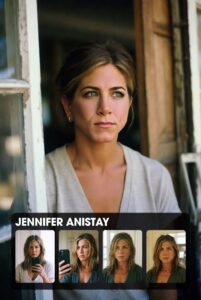
What made her performance so captivating was not just her natural comedic timing or that famous “Rachel haircut,” but the emotional honesty she brought to the role. In an industry that often rewarded toughness and detachment, Aniston allowed vulnerability to shine through. She wasn’t afraid to show Rachel’s insecurities, her heartbreaks, or her moments of self-doubt. At the same time, there was an unmistakable strength in her characters — a quiet determination to grow, to love, and to stand on her own.
Off-screen, the young Jennifer Aniston displayed similar grace. While many newcomers quickly fell into the traps of fame — wild parties, public meltdowns, or carefully constructed personas — Aniston remained remarkably grounded. She handled early interviews with warmth and self-deprecating humor, never pretending to be more experienced or sophisticated than she actually was. When Friends exploded into a global phenomenon, she managed the sudden tsunami of attention with surprising poise for someone so young.
Her early film roles further showcased this unique blend. In movies like She’s the One (1996) and Picture Perfect (1997), Aniston played women who were both emotionally open and resilient. She had the rare ability to make audiences feel protective of her characters while simultaneously admiring their inner fortitude. Critics and fans alike noticed that she never relied solely on her beauty or charm; instead, she invested her performances with genuine emotional depth.
Perhaps what was most striking about Aniston in those youngest Hollywood years was her refusal to be defined by a single image. While the media tried to box her into the “girl-next-door” or “romantic comedy queen” categories, she quietly resisted easy labels. There was always a sense of quiet strength beneath the vulnerability — a woman who knew who she was, even when the world was still trying to figure her out.
Looking back, Jennifer Aniston’s early years in Hollywood remain a masterclass in graceful navigation of fame. She showed that it was possible to be both soft and strong, uncertain yet determined, vulnerable without being weak. In an industry that often demands performers choose between being likable or powerful, Aniston proved that the most compelling presence comes from embracing both.
Her journey from struggling actress to one of the most beloved stars of her generation was never about perfection. It was about showing up as a real, complicated human being — and doing so with uncommon grace. That delicate balance she struck in her youngest years would become the foundation of a career that has endured for decades.
Leave a Reply