How one woman named Julia Roberts continues to redefine staying power
In an industry notorious for short shelf lives, especially for women, Julia Roberts has built a career that defies every conventional rule of Hollywood longevity. At 58, she is not merely surviving — she is thriving with greater depth, selectivity, and cultural relevance than at many earlier peaks. Her transformative performance in Luca Guadagnino’s After the Hunt (2025) as Professor Alma Imhoff stands as the latest proof: a complex, morally ambiguous academic navigating secrets, accusations, and personal reckoning. The role has earned critical acclaim, a Golden Globe nomination, and renewed conversations about Roberts’ unmatched staying power.
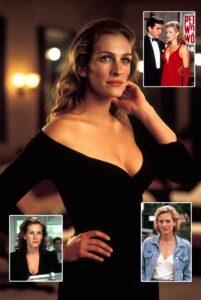
Roberts first exploded onto the scene with Pretty Woman (1990), a cultural phenomenon that made her America’s sweetheart. What followed could have been a predictable arc of rom-com repetition or gradual fade. Instead, she chose intentional evolution. After winning her Oscar for Erin Brockovich (2000), she stepped away at the height of fame to focus on family, marrying Danny Moder in 2002 and raising their three children largely outside the spotlight. This willingness to pause — rare for any star — allowed her to return stronger, more grounded, and more selective.
Her staying power stems from a deliberate philosophy: quality over quantity, authenticity over trend-chasing. Roberts does not flood the market with projects or reinvent herself for relevance. She waits for stories that matter. In After the Hunt, she brings lived wisdom to Alma’s quiet turmoil — subtle expressions and restrained emotion that convey volumes without needing spectacle. Director Guadagnino and co-stars Ayo Edebiri and Andrew Garfield have praised her generous, centered presence on set. The film’s Venice Film Festival standing ovation highlighted how Roberts’ mature craft elevates material into something profound.
Off-screen, Roberts redefines longevity through radical normalcy. She embraces aging with visible grace, rejecting pressure for cosmetic perfection in favor of “dignity, humor, and serenity.” Family breakfasts, gardening, and deep conversations remain her anchors. This balance fuels her work rather than distracting from it. While many celebrities exhaust themselves chasing relevance, Roberts protects her energy for what truly matters — meaningful roles, stable relationships, and personal peace.
Her influence extends beyond individual films. Roberts proves that staying power is not about constant visibility but about consistent truthfulness. She has turned down projects that didn’t align with her values, taken breaks without apology, and returned when ready. In doing so, she has inspired countless women navigating midlife, career shifts, and self-redefinition. Her example shows that success can include saying no, protecting privacy, and allowing natural growth.
Julia Roberts has never played the Hollywood game by its rules, and that is precisely why she continues to win at it. At an age when many actresses struggle for substantial parts, she commands them with quiet authority. Her career is not a sprint or even a marathon — it is a masterclass in sustainable excellence. Through authenticity, intention, and the courage to evolve on her own timeline, one woman named Julia Roberts keeps redefining what real staying power looks like in Hollywood and beyond.
Leave a Reply