Jennifer Aniston turned the cracks of her childhood into the strength that made her shine across Hollywood.
Jennifer Aniston, one of Hollywood’s most beloved and enduring stars, did not glide into fame on a smooth path. Born on February 11, 1969, in Sherman Oaks, California, to actor John Aniston and former model-actress Nancy Dow, her early life was marked by instability, criticism, and emotional turbulence. Rather than letting these “cracks” define or diminish her, Aniston transformed them into sources of resilience, empathy, and quiet determination that fueled her remarkable career.
The cracks appeared early. When Jennifer was just nine years old, her parents’ marriage ended in a bitter divorce. She later described the split as far from amicable, recalling how she was used as a “pawn” in their conflict at a time when little attention was paid to shielding children from adult hostilities. The household felt “destabilized and unsafe,” with witnessing unkindness between adults leaving deep impressions. Her father, known for his long-running role on Days of Our Lives, was often absent, while her mother, a strict former model, was highly critical of Jennifer’s appearance and behavior. Aniston has spoken about being teased for being “chubby” as a child and carrying the weight of her mother’s high standards of beauty. She also struggled with dyslexia, which went undiagnosed until her early twenties, leading her to believe she simply “wasn’t smart.”
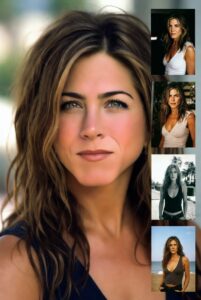
These experiences could have bred bitterness or insecurity. Instead, Aniston chose perspective. In a candid 2020 conversation, she reflected: growing up in such an environment taught her not to replicate pain in her own life. “You can either be angry or be a martyr, or you can say, ‘You’ve got lemons? Let’s make lemonade.’” She credits her parents, in a bittersweet way, for building her ability to stay afloat during heartbreak and uncertainty. Therapy became a tool for healing, especially after a period of estrangement from her mother following Nancy Dow’s 1999 memoir, which further strained their relationship. Her mother passed in 2016, and her father in 2022, but Aniston has spoken of finding closure and focusing on breaking negative cycles.
This inner strength directly shaped her professional journey. After moving to New York and attending the High School of Performing Arts, Aniston faced years of rejection. She took odd jobs—waitressing, bike messenger, telemarketer—to support herself while pursuing acting. Early television roles in short-lived shows like Molloy and Ferris Bueller brought disappointment, yet she persisted. Her breakthrough came in 1994 with Friends, where she portrayed Rachel Green. The role not only launched her to global stardom but allowed her to channel vulnerability and humor drawn from personal experience. The “Rachel haircut” became iconic, and Aniston earned an Emmy and Golden Globe for her performance.
Beyond Friends, Aniston built a versatile film career with romantic comedies, dramas like Cake, and series such as The Morning Show. Her relatability—rooted in authentic emotional depth—resonates with audiences. She has spoken about how childhood wounds helped her portray complex human feelings without fear. Financially, she became one of Hollywood’s highest-paid actresses, proving that early struggles honed her work ethic and perseverance.
Today, at 56, Jennifer Aniston shines not despite her past but because of how she reframed it. She turned criticism into self-acceptance, instability into empathy, and setbacks into motivation. Her story reminds us that Hollywood’s brightest lights often emerge from the darkest cracks—polished by resilience, humor, and an unwavering choice to make lemonade. Aniston’s enduring appeal lies in her humanity: she shows that strength is not the absence of scars, but the light that shines through them.
Leave a Reply