How Jennifer Aniston Learned to Love Herself After Years of Chasing Everyone Else’s Expectations
Jennifer Aniston’s radiant smile and effortless confidence mask a long, often painful journey toward self-love. For decades, she chased external validation—from a critical mother, Hollywood’s beauty standards, tabloid expectations, and societal pressure to become a wife and mother. Today, at 57, she speaks openly about finally making peace with herself, honoring her body, and rejecting the impossible standards that once dictated her worth.
The foundation of Aniston’s self-doubt was laid in childhood. Her mother, Nancy Dow, a former model, was harshly critical of her appearance, frequently pointing out flaws and making young Jennifer feel she was never enough. Teased at school for being “chubby,” Aniston also struggled with undiagnosed dyslexia, which left her feeling “not smart” and academically inadequate. “I thought I wasn’t smart. I just couldn’t retain anything,” she later revealed. These early wounds created a deep-seated belief that she had to earn love through perfection.
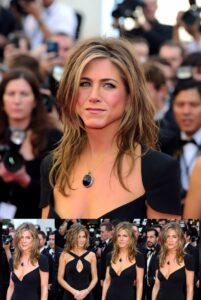
Fame amplified the pressure. After Friends catapulted her to stardom, the media scrutinized every aspect of her life. Her 2005 divorce from Brad Pitt triggered years of brutal tabloid narratives portraying her as the “abandoned” woman whose career focus supposedly cost her a family. Endless pregnancy rumors and accusations of being “selfish” or a “workaholic” stung deeply, especially as she quietly battled infertility for nearly 20 years. She underwent IVF, tried Chinese teas, and explored every option, all while keeping her pain private. “They didn’t know my story,” she said in interviews. The false narratives hurt—“It does affect me—I’m just a human being”—yet she refused to perform her grief for the public.
The turning point came gradually through boundary-setting and introspection. In her powerful 2016 Huffington Post essay, Aniston pushed back against the idea that a woman’s value lies solely in marriage and motherhood. Over time, she embraced therapy, meditation, and a gentler approach to her body. She shifted from harsh self-criticism to appreciation, learning to “honor where your body is.” In recent interviews, she has described developing a loving relationship with her body: “We really love each other now… We’ve got to love our bodies. It’s doing the best it can.”
Aniston practices what she calls the 80/20 rule—80% healthy habits like strength training, nutritious meals, and mindfulness, with 20% flexibility for pizza, martinis, and late nights with friends. She prioritizes consistency over perfection, morning meditation, and digital boundaries for better sleep. Her mindset, fueled by “an eternal fountain of optimism and positivity,” has become her greatest wellness tool. She no longer chases unrealistic goals, instead focusing on feeling strong, present, and aligned.
Professionally and personally, this self-love has freed her. As a producer on The Morning Show and founder of the successful LolaVie haircare line, she controls her narrative. In a supportive relationship with hypnotherapist Jim Curtis since mid-2025, she radiates a quieter joy rooted in authenticity rather than performance.
Jennifer Aniston’s story teaches that self-love is not a destination but a daily practice of releasing others’ expectations. She stopped measuring herself against impossible ideals and began valuing the one body and life she has. “All bodies are beautiful,” she once said. “We should take care of what we have and not take it for granted.”
In embracing her full self—flaws, scars, strengths, and all—Aniston shows modern women a powerful truth: the moment you stop chasing everyone else’s approval is the moment you finally come home to yourself.
Leave a Reply