From marriage to Brad Pitt to true freedom: the biggest turning point in Jennifer Aniston’s life.
For many years, Jennifer Aniston’s identity seemed intertwined with her fairy-tale marriage to Brad Pitt. Their 2000 wedding was the stuff of Hollywood legend — a beautiful, successful couple at the height of their careers. Yet the end of that marriage in January 2005 became the most painful, public, and ultimately transformative chapter of her life. What the world saw as a devastating fall was, for Aniston, the catalyst that led her from feeling defined by love to discovering genuine freedom and self-worth.
The divorce unfolded under an unrelenting media microscope. Tabloids turned the split — and Pitt’s subsequent relationship with Angelina Jolie — into a global spectacle, dubbing it the ultimate love triangle. Aniston was cast as the “jilted wife,” with endless speculation about her fertility, career, and personal failings. In a rare 2025 Vanity Fair interview, she reflected on that period as “such a vulnerable time,” admitting she took the coverage “personally” and carried “some PTSD” from the era when tabloid journalism felt like “a form of a sport.” The scrutiny was jarring, invasive, and deeply hurtful.
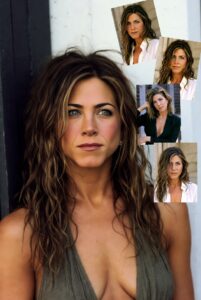
Instead of crumbling, Aniston chose resilience. She told herself, “Just pick yourself up by the bootstraps and keep on walking, girl.” Filming The Break-Up (2006) right after the split became unexpectedly cathartic, allowing her to process emotions through her character. She leaned into therapy, confronted childhood wounds from her parents’ divorce, and began the slow work of rebuilding on her own terms.
This painful turning point marked the beginning of her liberation. Aniston stopped tying her value to romantic status or societal expectations. She focused on career evolution — moving beyond the “Rachel Green” label with raw performances like Cake (2014) and her powerful role as Alex Levy on The Morning Show. She spoke boldly about fertility struggles and pushed back against judgment in her 2016 essay, reminding the world that women are “complete with or without a mate, with or without a child.”
Her second marriage to Justin Theroux (2015–2018) ended more privately, but the lessons from the Pitt era endured. Aniston reframed both divorces as “successful” because they prioritized happiness over staying together for appearances. She learned she didn’t need to force a relationship or conform to traditional timelines.
Today, in 2026 at age 57, that freedom shines brightly. Since mid-2025, she has been in a calm, supportive relationship with wellness coach and hypnotherapist Jim Curtis. Introduced by mutual friends, their connection feels grounded and intentional — full of mindfulness, shared values, and low-key joy. Yet it enhances her life without defining it. Aniston continues to thrive professionally, enjoying independence, strong friendships, and peace on her own terms.
The end of her marriage to Brad Pitt was not the end of her story — it was the pivot that set her free. From the ashes of public heartbreak, Jennifer Aniston rose into authentic self-discovery, proving that sometimes the greatest turning points are born from what feels like the deepest loss.
Leave a Reply