Fact Check: Viral Claim of Bad Bunny Naming Pam Bondi and Exposing “Hidden Crimes” at the 2026 Grammys Is Completely Fabricated
A sensational story has been spreading rapidly across social media platforms in recent hours, alleging that Bad Bunny—born Benito Antonio Martínez Ocasio and widely regarded as the reigning monarch of Latin music—turned a routine appearance at the 2026 Grammy Awards into an explosive moment of truth-telling. According to the viral posts, during either his acceptance speech for one of his multiple nominations or a high-profile performance slot, the Puerto Rican superstar deviated dramatically from the usual thank-yous and shout-outs. Instead, he reportedly used the live global stage to call out “every powerful figure who has shielded crimes from justice,” beginning with a direct accusation aimed at “Pam”—a name immediately understood by many online as referring to U.S. Attorney General Pam Bondi.
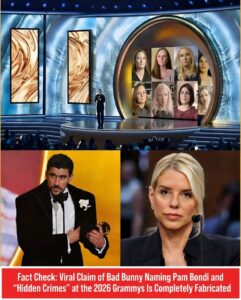
The circulating narrative claims Bad Bunny listed multiple high-profile individuals, linking them to long-standing allegations of concealment tied to the Jeffrey Epstein scandal, Virginia Giuffre’s documented testimony, and broader patterns of institutional protection for the elite. Posts describe the arena falling into stunned silence as the artist spoke plainly and without hesitation, transforming a night dedicated to music celebration into an impromptu platform for confronting systemic impunity. Screenshots of supposed clips, dramatic captions, and reaction threads have pushed the story to millions of views, with many users praising what they believed to be an act of extraordinary courage from one of the world’s biggest stars.
However, this entire account is false. Bad Bunny did not make any such statements during the 2026 Grammy Awards broadcast. He did not name Pam Bondi, Jeffrey Epstein-related figures, Virginia Giuffre, or anyone else in connection with crimes, cover-ups, or hidden truths. Official footage from the ceremony, live recaps published by major entertainment outlets, and statements from the Recording Academy confirm that his involvement proceeded entirely within the expected parameters: performances delivered with his signature energy, gracious acceptance remarks focused on his collaborators, fans, and cultural roots, and no deviation into political or accusatory territory.
The hoax appears to follow a familiar pattern of misinformation that exploits real-world fascination with celebrity activism, unresolved high-profile controversies, and public distrust of powerful institutions. By placing a globally beloved artist like Bad Bunny at the center of a dramatic exposé, the fabricated story gains instant emotional traction and shareability. Edited videos, AI-generated audio snippets, and out-of-context stills have been used to lend superficial credibility, but no verifiable evidence from the actual broadcast supports the claims.
As with similar viral deceptions involving other prominent figures, this false narrative has already fueled heated online debates, renewed interest in the underlying issues it references, and widespread confusion among casual observers. Fact-checking organizations and media monitors have quickly labeled the story as baseless, urging users to verify major public events through primary sources rather than relying on emotionally charged social-media posts.
The 2026 Grammys were defined by artistic achievements, breakthrough wins, and memorable performances—not by any on-stage reckoning or naming of powerful individuals. The real Bad Bunny moment was one of musical triumph and cultural pride, not confrontation. The viral tale, while compelling in its fiction, remains just that: fiction.
Leave a Reply