Defiant Roadside Memorial at Epstein’s Zorro Ranch Swells as Community Demands Unforgotten Justice
Every week that passes, the roadside memorial beside Jeffrey Epstein’s former Zorro Ranch grows more imposing and unyielding. What began as a modest collection of flowers and handwritten notes has evolved into a powerful, ever-expanding tribute lined with fresh bouquets, flickering candles, crosses, artwork, and messages of remembrance. Drivers on the remote New Mexico highway now slow down instinctively, confronted by this striking monument that refuses to let the victims of abuse fade from memory. It stands as a visible embodiment of lingering pain, simmering rage, and an unrelenting call for accountability.
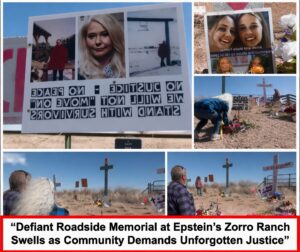
The memorial, located near the entrance gates of the sprawling 7,500-acre property south of Santa Fe, honors survivors and those whose voices were silenced. Community members, activists, and families have repeatedly rebuilt it after earlier attempts were mysteriously removed, turning the site into a symbol of resilience. Locals like Yvonne and Lou Gibney have helped maintain the display, while artist Rebecca Stover is reportedly developing a permanent sculpture to represent healing and strength. Signs reading “Search the Ranch” and “Justice for the Victims” underscore the ongoing demands for thorough investigations into allegations of trafficking and worse at the estate.
The tribute has drawn hundreds to rallies, especially around International Women’s Day, where participants placed flowers, sang, and listened to survivor advocates. Despite controversy and questions about its placement on public land, roadside memorials (known as descansos in New Mexico) enjoy legal protections, fueling determination to keep it standing. Each new addition — more photos, teddy bears, and personal tributes — transforms the dusty roadside into a place of pilgrimage that forces passersby to acknowledge the human cost of Epstein’s legacy.
This growing monument raises profound questions: Will this ever-expanding tribute finally compel authorities to bring the full truth into the light? With active searches using cadaver dogs and renewed state investigations, the memorial amplifies pressure on officials to leave no stone unturned. Or will powerful interests find ways to dismantle it — through legal challenges, removal, or media dismissal — and once again bury the uncomfortable realities?
For many, the site represents more than remembrance; it embodies defiance against systemic silence. As long as the flowers keep appearing and candles continue burning, the victims remain present in public consciousness. The memorial challenges drivers, officials, and the world not to look away from the ranch’s dark history.
Whether this grassroots effort sparks deeper revelations or faces eventual suppression, its message endures: the pain of those harmed at Zorro Ranch will not be erased. In the high desert landscape, this defiant display stands as living proof that some truths refuse to stay hidden, demanding justice long after the crimes themselves.
Leave a Reply