
On October 21, a book will land on shelves that many of the world’s most influential institutions hoped would never exist. Corporate strategists are preparing internal risk briefings. Law firms have activated crisis-management teams. Public-relations advisors are updating contingency playbooks for clients whose names may appear in a narrative they cannot control.
That book is I Was Nobody’s Girl, the posthumous memoir of Virginia Roberts Giuffre — a woman long dismissed by the elite, yet instrumental in exposing one of the most notorious exploitation networks of the 21st century. And today, even before its official release, the memoir has ignited a global shockwave.
For decades, billionaires, royal insiders, and political power brokers believed her story was buried beneath a fortress of legal firewalls and financial influence. But Giuffre’s final words, preserved meticulously in a 400-page manuscript, have cracked the walls they spent years fortifying.
The question now being debated in boardrooms, editorial suites, and government offices is no longer whether the book will cause damage — but how much, how fast, and to whom.
A Memoir Designed Not for Catharsis — but for Reckoning
Early excerpts circulating among journalists, attorneys, and advocacy groups reveal that the memoir is not structured like a conventional survivor testimony.
It is methodical.
It is evidence-driven.
And it reads as a multi-layered indictment of an ecosystem that enabled abuse while shielding its architects from exposure.
Giuffre distills her thesis into a single, arresting sentence — one that senior media editors reportedly described as “career-ending for certain individuals”:
“They counted on my silence.
They never counted on my memory.”
From a strategic perspective, this line encapsulates the looming challenge for the elite: reputational risk amplified by historical documentation, corroborated patterns, and the sudden disappearance of the one person who might have been pressured, discredited, or sued into retreat.
Giuffre died by suicide earlier this year at age 41 in Australia, where she had rebuilt her life as a mother and homemaker. Her death raised difficult questions, but her publisher, Alfred A. Knopf, underscored her intent: she wanted this book published, and she wanted it published precisely this way.
The Woman Who Disrupted a Global Power Network
Virginia Giuffre was not a passive witness in the unraveling of Jeffrey Epstein’s empire — she was one of the most pivotal forces behind it. Her public allegations helped shatter political alliances, destabilize reputations, and expose systemic failures within law enforcement, finance, and global governance.
Federal prosecutors would later describe Epstein’s operation with Ghislaine Maxwell as a sex-trafficking ring that exploited hundreds of minors and young women across multiple jurisdictions. But long before institutions acknowledged this, Giuffre was already telling the world what had been happening.
For years, she was ignored.
Then smeared.
Then targeted.
The release of her memoir represents a strategic shift — from reactive defense to proactive documentation. And because it is being published after her death, the usual pathways for containing or undermining her testimony have evaporated.
A Timeline of Abuse, Influence, and Institutional Failure
The memoir appears poised to expand extensively on the themes found in court documents and her earlier unpublished work, The Billionaire’s Playboy Club, which was unsealed during litigation.
1. A Childhood Marked by Vulnerability
In early court records, Giuffre described how patterns of exploitation began when trusted adults offered “help” that devolved into predation. This pattern — adults identifying her vulnerability, offering protection, then weaponizing it — is a recurring theme that experts say could strengthen the credibility of her broader allegations.
2. The Mar-a-Lago Encounter
One of the most widely discussed episodes resurfacing with the book’s release is Giuffre’s claim that she was working as a locker-room attendant at the Mar-a-Lago Resort and Spa in 2000 when Ghislaine Maxwell approached her and initiated a conversation that led to her recruitment.
Maxwell has denied key portions of this interaction. Former President Donald Trump has distanced himself from Epstein in recent years, stating he severed ties after Epstein attempted to hire away girls and young women from the resort. Still, the overlap of timelines and proximity raises questions that public-relations strategists privately describe as “high-exposure vulnerabilities.”
3. The International Web of Power
Giuffre’s testimony — and now her memoir — references interactions with political figures, financiers, academics, and royals. While many of these individuals deny wrongdoing, the reputational risk remains substantial because the allegations reinforce existing narratives about systemic failures, elite impunity, and the weaponization of wealth.
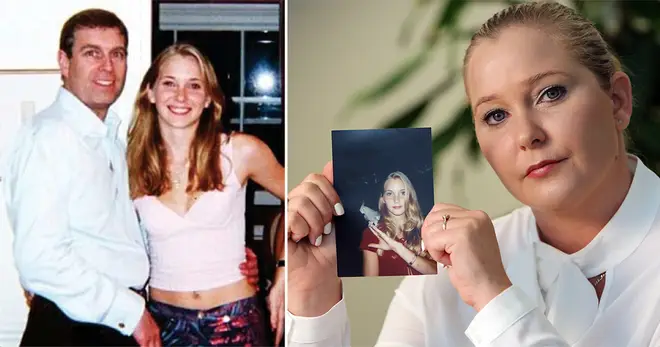
One of the most globally resonant images connected to her story remains the photograph of Giuffre with Prince Andrew, which she has consistently said was taken during a period of abuse. That photo catalyzed a fall from grace that reverberated through the British monarchy — a signal of how far the consequences of her memoir may reach.
Ghislaine Maxwell and the Corporate Implications of Denial
Ghislaine Maxwell, who is serving a 20-year sentence for her role in the trafficking operation, remains a central figure in both the memoir and the public conversation.
In a recent transcripted dialogue with Deputy Attorney General Todd Blanche, Maxwell claimed she did not witness misconduct by Trump, former President Bill Clinton, or other high-profile men associated with Epstein. Corporate governance experts note that such statements, while appearing exculpatory, may actually amplify scrutiny: they reopen unresolved questions rather than close them.
The timing of the conversation — one week before her transfer to a minimum-security prison camp — has prompted internal speculation in legal circles about whether Maxwell is positioning herself for future negotiations or strategic alignment.
The First Legal Turning Point: 2008 and the Shocking Plea Deal
A key moment that propelled Giuffre to reenter the legal arena is described in her earlier manuscript. After being informed by a U.S. federal agent that she had been identified as a victim in Epstein’s controversial 2008 plea agreement, she discovered that the deal included provisions for a victims’ compensation fund.
The information catalyzed a personal and strategic shift.
“Now it was my turn,” she wrote.
“I had the choice to turn the tables on him.”
She contacted the law firm handling the victims’ claims — and thus began a chain of legal challenges that would ultimately expose Epstein’s operation and generate global outrage over the leniency of his original agreement.
A Lawsuit That Changed Everything
In 2009, Giuffre sued Epstein, alleging that he:
operated a child exploitation enterprise,
transported minors for illegal sexual activities, and
used hidden cameras to create illicit recordings inside his Palm Beach mansion.
Epstein settled with her for more than $500,000 — a figure that, in hindsight, appears insignificant compared to the reputational and financial fallout that followed.
When the settlement was unsealed in January 2022, it set off a new wave of implications. Within a month, Prince Andrew agreed to a financial settlement in her lawsuit against him. Although Andrew has denied wrongdoing, the settlement’s size and swiftness underscored the global reach of the legal consequences triggered by Giuffre’s persistence.
Epstein’s Death and the Public Trust Crisis
Epstein’s 2019 death in federal custody, officially ruled a suicide, has remained a defining event in modern public skepticism. Polls consistently show that a significant portion of the global public doubts the official explanation.
For corporations, governments, and institutions, the persistence of these doubts represents a larger crisis: the erosion of trust in systems meant to ensure accountability. The release of Giuffre’s memoir is expected to accelerate that erosion, especially as it includes firsthand insights into the psychological and operational dynamics of Epstein’s network.
What Makes This Memoir Uniquely Dangerous for the Elite
From a CEO’s vantage point, the risk landscape around I Was Nobody’s Girl extends far beyond the individuals directly implicated.
Three structural threats are emerging:
1. Increased Litigation Exposure
Corporations, universities, and philanthropic organizations with historical ties to Epstein or his funders may face renewed scrutiny. General counsels are already revisiting old emails, donation records, visitor logs, and archived media statements.
2. Reputational Contagion
In an era where information spreads instantly, leaders associated—even distantly—with figures mentioned in the memoir may encounter brand volatility. Investors, boards, and donors are particularly sensitive to narratives involving power abuse and institutional negligence.
3. Policy and Regulatory Fallout
The book is expected to reignite ongoing debates about:
prosecutorial accountability,
victim protection frameworks,
the role of money in suppressing allegations,
and the boundaries of institutional privilege.
Government agencies, already under pressure for their handling of the Epstein case, may now face bipartisan demands for deeper investigations.
Why the Elite Failed to Contain Her Story
From a strategic analysis standpoint, the power structure surrounding Epstein relied on three assumptions:
Victims would remain silent.
If they spoke, they could be discredited.
If they persisted, settlements would neutralize them.
Virginia Giuffre broke all three assumptions.
She spoke.
She refused to be silenced.
And she consistently leveraged each legal and public-relations challenge as a platform to amplify—not retreat from—her message.
Her memoir is the culmination of that strategy.
The Final Chapter: What Comes Next
Stakeholders across industries are bracing for:
global media investigations expected to launch upon the memoir’s release,
possible unsealing of additional court records,
renewed attention on Epstein’s financial networks,
and political consequences for leaders previously connected to the case.
Executives overseeing brand reputation, legal risk, or public trust should prepare for a prolonged information cycle. Analysts predict that the memoir’s release will generate multiple waves of scrutiny as journalists, attorneys, survivor advocates, and lawmakers dissect its claims.
The timing — just months after Giuffre’s death — ensures the narrative will be framed not merely as a scandal, but as a matter of legacy, accountability, and unfinished justice.
A Legacy Too Large to Bury
Giuffre’s publisher describes the memoir as “the powerful story of an ordinary girl who confronted extraordinary adversity.” But its significance reaches far beyond personal narrative.
It is a mirror held up to global systems of power.
A document of institutional failure.
A challenge to cultures of silence.
And a catalyst for a reckoning that many believed would never arrive.
For decades, some of the world’s most powerful individuals relied on the assumption that no one would ever piece together the truth.
What they did not anticipate was that the girl they underestimated would grow into the woman who exposed them — and that even in death, her words would carry the force of a global accountability movement.
I Was Nobody’s Girl is not simply a memoir.
It is a shockwave.
And its ripple effects are only beginning.

The Daily Show, once a comforting space of satire and laughter in late–night television, transformed entirely on what viewers now call Night Seven—Nightmare. No jokes. No playful banter. No familiar comedic rhythm. Instead, the stage became a battlefield of truth, and the nation watched it unfold with breathless tension.
Jon Stewart — the man whose presence defined an era — made an unexpected return. But he didn’t come alone. Standing beside him were four of The Daily Show’s most iconic correspondents: Ronny Chieng, Jordan Klepper, Michael Kosta, and Desi Lydic. Five influential voices from five different angles of political satire reunited under one purpose: to confront what had been buried for far too long.
They weren’t there to entertain.
They were there to expose.
A RETURN THAT SHOOK THE STUDIO
As Stewart walked onto the stage, the atmosphere shifted instantly. The audience sensed it — this was not a reunion for nostalgia, nor a special episode for ratings. It felt heavier, sharper, like a collective inhale before a storm.
He opened with a line that cut through the room:
“IF YOU HAVEN’T READ IT — YOU ARE NOT READY TO SPEAK THE TRUTH.”

Silence.
Not the comedic pause for effect — but the kind of silence found in courtrooms before a verdict.
In that moment, The Daily Show no longer felt like a late-night program.
It felt like a tribunal.
Ronny Chieng, Jordan Klepper, Michael Kosta, and Desi Lydic stood in absolute unity — each with a folder in hand. Their expressions said everything: tonight would not be business as usual.
Tonight would be the night America confronted what it had been avoiding.
THE MOMENT THE TRUTH BEGAN
Stewart began by speaking about Virginia Giuffre, the woman whose voice had been ignored, silenced, or attacked for nearly two decades. He acknowledged how the entertainment industry, the press, and even the public had often turned away from her warnings.
“She wasn’t just telling a story,” Stewart said, “she was pointing at a structure built to stay hidden.”
Then Ronny Chieng stepped forward, opening the first folder.
And the naming began.
Twenty powerful superstars.
Twenty untouchable figures.
Twenty names that had lived comfortably in the shadows — until Night Seven.

They read the names one by one.
Each name dropped like a strike of lightning.
Each name broke another layer of silence.
The audience gasped, whispered, froze.
And when the twentieth name was spoken, the room fell into complete stillness — the kind that only arrives when a truth too large to deny finally hits.
THE ERUPTION THAT FOLLOWED
The stillness lasted barely three seconds.
Then the studio exploded — gasps, shouts, applause, disbelief, outrage.
And online, the reaction was immediate and volcanic.
Within minutes, three hashtags consumed social media:
#ShowTheTruth
#JusticeNow
#TheBookTheyFear
Clips from the broadcast shot across platforms with breathtaking speed. Commentators called it “the most shocking moment in late-night TV history.” Others called it “a turning point for American media.” Even Hollywood insiders admitted anonymously that they “never expected The Daily Show to be the one to blow the doors open.”
But that’s exactly what it did.
For the first time, a mainstream program had publicly spoken the names that tabloids, studios, and PR teams had avoided for decades.
And America was no longer able — or willing — to look away.
AN UNSCRIPTED REVOLT
CBS insiders later revealed that nothing that night was scripted.
No teleprompter.
No rehearsed lines.
No pre-approved statements.
Jon Stewart and the four correspondents had coordinated privately, determined that if they were going to confront the truth, it had to be raw, real, and unfiltered.
Jordan Klepper reportedly refused to rehearse his segment, saying:
“You cannot practice the truth. You just say it.”
And Desi Lydic later admitted that the energy on stage felt “like standing in front of a tidal wave that had been waiting years to break.”
This was not entertainment.
This was a collective act of moral defiance.
THE NIGHT HOLLYWOOD COULDN’T SLEEP
As the episode ended, Stewart closed with a single line:
“Silence is no longer an option.”
It became the quote replayed across every network the next morning.
Hollywood’s reaction was instantaneous — and panicked.
Publicists locked down statements.
Studios made emergency calls.
Several celebrities abruptly canceled appearances.
Legal teams advised clients to “stay offline immediately.”
But it was too late.
Night Seven had already entered the bloodstream of the nation.
The revelation couldn’t be undone.
The names couldn’t be unspoken.
The questions could no longer be buried.
America stayed awake — analyzing every clip, every pause, every word.
Because for the first time in years, late-night TV wasn’t laughing at power.

It was exposing it.
A NIGHTMARE FOR THE POWERFUL — A WAKE-UP CALL FOR AMERICA
Night Seven wasn’t just a broadcast.
It was a rupture.
A moment when five voices — the legend Jon Stewart and four fearless correspondents — pushed aside comedy to shine a spotlight on the kind of truth that terrifies the powerful.
And America felt it.
Not as entertainment.
Not as scandal.
But as a reckoning.
A night the nation could not — and will not — forget.
Because once the truth is spoken out loud, it can never be buried again.
Leave a Reply