Virginia Giuffre Alleges She Was Trafficked to Retail Magnate Leslie Wexner
Virginia Roberts Giuffre, a central figure in the Jeffrey Epstein sex-trafficking scandal, has long maintained that she was deliberately trafficked to Leslie Wexner, the billionaire founder of L Brands (parent company of Victoria’s Secret and Bath & Body Works), as part of Epstein’s operation to provide sexual access to powerful and wealthy men.
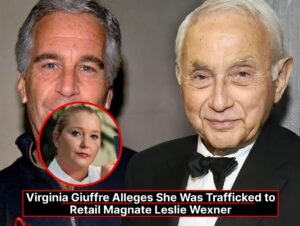
According to Giuffre’s sworn statements, depositions, and public accounts, Epstein introduced her to Wexner in the early 2000s when she was still a teenager under Epstein’s control. She described being flown to Wexner’s sprawling Ohio estate, where she alleges she was directed to engage in sexual acts with the retail tycoon. Giuffre has asserted that these encounters were not isolated but part of a broader pattern in which Epstein used young women as commodities to curry favor, secure financial benefits, and build influence among elite circles.
Wexner, one of Epstein’s most significant financial backers for many years, has consistently denied any knowledge of or involvement in Epstein’s criminal activities. He has stated publicly that he severed ties with Epstein around 2007 after becoming aware of troubling rumors, and he has emphasized that he was never accused of wrongdoing in any criminal proceeding related to the case. Despite these denials, Giuffre’s allegations have kept Wexner’s name in the spotlight, especially given the depth of their documented business and personal relationship. Epstein managed portions of Wexner’s fortune, held power of attorney over some of his assets, and enjoyed extraordinary access to the billionaire’s properties, including his New York townhouse and Ohio mansion.
Giuffre has framed her claims within the larger context of Epstein’s trafficking network, explaining that she was groomed starting at age 16 or 17 while working at Donald Trump’s Mar-a-Lago resort. She alleges that Epstein and Ghislaine Maxwell promised modeling opportunities and financial stability, only to coerce her into sexual servitude. Wexner, she says, was among the high-profile individuals she was instructed to please, with encounters arranged at various locations and facilitated by Epstein’s private travel arrangements.
The accusation has never led to criminal charges against Wexner, who has not been named as a defendant in any related civil or criminal case involving Giuffre. However, her testimony contributed to broader scrutiny of Epstein’s financial enablers and the question of how much influential figures knew—or chose not to know—about the abuse occurring in their orbit. Court documents unsealed in recent years have referenced Wexner in connection with Epstein’s lifestyle and assets, though they stop short of directly implicating him in sexual misconduct.
Giuffre has described coming forward about Wexner and others as an act of reclaiming her narrative after years of being dismissed or disbelieved. She has emphasized that naming powerful men was never about sensationalism but about exposing the mechanisms that allowed exploitation to continue unchecked. Supporters view her persistence as courageous; skeptics point to the lack of corroborating physical evidence or independent witnesses for certain specific claims.
Regardless of legal outcomes, Giuffre’s allegation against Leslie Wexner remains one of the most explosive threads in the Epstein saga. It underscores the intersection of extreme wealth, private access, and alleged predation—raising uncomfortable questions about accountability among the ultra-rich long after Epstein’s death. For Giuffre, speaking these details publicly has been both a personal reckoning and a demand that the full scope of the network be examined, no matter who it touches.
Leave a Reply