On a date in the early 2010s, during a deposition in Florida civil proceedings tied to Jeffrey Epstein and Ghislaine Maxwell, Virginia Giuffre answered questions under oath. At approximately 2:14 p.m., according to circulating references to the transcript, she identified a man named Bill Riley. Giuffre described him as someone allegedly connected to Epstein—possibly a private investigator—who reportedly approached her with threats. She stated he whispered warnings of destruction if she refused to remain silent about what she had witnessed and endured. The moment passed in the legal record without immediate widespread attention, buried among hundreds of pages of testimony from multiple Epstein-related cases.
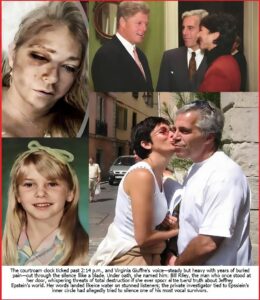
Bill Riley appears in older court documents from Epstein litigation, including mentions in Palm Beach police reports and depositions where he is noted as an investigator who contacted victims or witnesses. No criminal charges were ever filed against him based on those references, and his role remained peripheral in public reporting for years.
Fast-forward to January 2026. A person identifying as William Sascha Riley—often referred to online as Sascha Riley or Sascha Barros Riley—began sharing accounts publicly through interviews, audio recordings, and posts on platforms like Substack and social media. Sascha claims to be the adopted child of Bill Riley. In these statements, Sascha alleges severe childhood abuse and exploitation, linking it to the same Epstein network that Giuffre described. The accounts include descriptions of being trafficked as a minor, exposure to violent acts, and claims that the trauma stemmed directly from the father’s alleged involvement in Epstein-associated activities.
Sascha’s emergence drew rapid online circulation. Posts connected the dots: Giuffre’s sworn identification of Bill Riley as an intimidator, followed decades later by his purported daughter’s testimony of inherited suffering. Viral threads and articles framed it as a generational echo—silence enforced on one survivor, then broken by another tied to the enforcer. Audio clips attributed to Sascha spread quickly, detailing graphic allegations of abuse, parties involving minors, and worse. Some outlets, including Snopes and independent Substack writers, examined the claims, noting inconsistencies in timelines and a lack of independent corroboration in official Epstein files released to date.
No new court filings or investigations have publicly confirmed Sascha’s full account as of late January 2026. Sascha, described in some reports as a retired U.S. veteran who served in Iraq, has called for scrutiny of the original documents mentioning Bill Riley. Supporters urge formal review; skeptics point to the absence of verified evidence beyond personal statements.
The parallel remains stark: one woman’s sworn words from years ago naming a figure of control, now met by another voice—claiming direct familial connection—detailing a continuing nightmare. Whether it leads to reopened inquiries or fades amid unproven allegations, the sequence underscores how Epstein’s shadow extends through accusations, silence, and belated reckonings.
Leave a Reply