In the shadowed halls of global power, a defiant Russian dissident’s words pierced the air like a dagger: “I have absolutely no doubt” that Vladimir Putin’s iron grip on Russia is destined to crumble. Vladimir Kara-Murza, the twice-poisoned opposition leader freed in a 2024 prisoner swap, has emerged as one of the Kremlin’s most unrelenting critics. In recent interviews, including a scathing appearance on France 24 in December 2025, he lambasted President Donald Trump’s Ukraine policy as “shameful,” accusing the U.S. leader of pushing Kyiv toward capitulation while offering Putin a lifeline. Kara-Murza dismissed Trump’s proposed peace plan—a 28-point framework heavily influenced by Russian demands—as little more than “Putin’s Christmas wish list,” designed to freeze the conflict on Moscow’s terms.
As of late 2025, Trump’s administration has pursued an aggressive diplomatic push to end the nearly four-year war, dispatching envoys like Steve Witkoff and Jared Kushner to negotiate with both sides. The plan calls for Ukraine to cede occupied territories, cap its military size, forgo NATO membership, and accept neutral status in exchange for security guarantees and reconstruction aid. Trump has expressed optimism, claiming talks are “closer than ever,” with meetings in Berlin and potential summits involving European leaders. Yet Putin has remained intransigent, rejecting compromises on territorial claims and insisting Russia will achieve its goals by force if necessary. Recent Russian advances, though grinding and costly, have captured small swaths of land in Donetsk and Zaporizhia, while massive drone and missile barrages continue to pummel Ukrainian energy infrastructure.
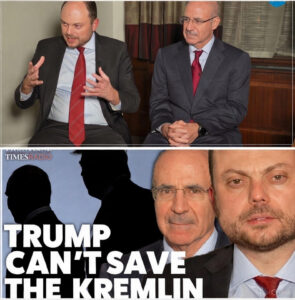
Kara-Murza, drawing from his own harrowing experiences—surviving Kremlin-orchestrated poisonings and a 25-year sentence for denouncing the invasion—argues that any deal appeasing Putin only prolongs his regime’s aggression. He warns that Trump’s approach, perceived by critics as overly accommodating to Moscow, risks legitimizing the invasion and eroding Western resolve. Having spent years in Siberian penal colonies, Kara-Murza now advocates globally for robust support to Ukraine, emphasizing that true peace requires Putin’s defeat, not accommodation. He envisions a post-Putin Russia reborn as a democratic European nation, free from authoritarianism.
The dissident’s prophecy stems from Russia’s mounting toll: staggering military losses exceeding 790,000 casualties, economic strain despite wartime adaptations, and growing isolation. Internal cracks, though suppressed, persist among elites and ordinary citizens weary of endless conflict. Kara-Murza insists history favors liberty over dictatorship, predicting that the war—intended to bolster Putin’s power—will ultimately hasten its end.
Trump’s efforts, while aimed at swift resolution, have faltered against Putin’s maximalism. Envoys shuttle between capitals, but core disputes over land, security, and sanctions remain unresolved. European allies, wary of concessions, have bolstered guarantees for Kyiv, freezing Russian assets to fund reparations. As winter deepens and battlefield stalemates endure, the question looms: Has Trump’s bid to broker peace inadvertently exposed Putin’s vulnerabilities, accelerating the regime’s downfall—or granted him breathing room for further escalation?
Kara-Murza’s unyielding conviction offers hope to opponents worldwide: Putin’s era, built on fear and force, cannot endure indefinitely. The world watches, breath held, as diplomacy and drones collide in a war with no clear victor yet. Will 2026 bring breakthrough or breakdown? The shadows lengthen, but dawn for a freer Russia may be closer than the Kremlin admits.
Leave a Reply