Published posthumously in October 2025, Virginia Giuffre’s memoir Nobody’s Girl: A Memoir of Surviving Abuse and Fighting for Justice offers a raw account of her grooming and trafficking by Jeffrey Epstein and Ghislaine Maxwell. Completed before her tragic suicide in April 2025 at age 41, the book details harrowing encounters with powerful men, including repeated allegations against Britain’s former Prince Andrew. Yet one figure’s treatment stands out for its brevity and positivity: President Donald Trump.
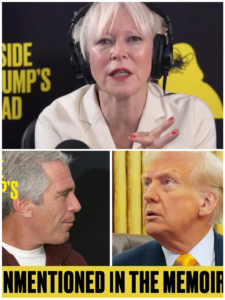
Giuffre recounts meeting Trump at Mar-a-Lago in 2000, where she worked as a teenage spa attendant and her father handled maintenance. Introduced by her father, she describes Trump as “couldn’t have been friendlier,” even asking if she babysat for resort guests’ children. The encounter is portrayed innocently—no flirtation, no misconduct. Trump appears marginally elsewhere as background in Palm Beach’s elite circles, but Giuffre makes no accusations against him. Co-author Amy Wallace confirmed Giuffre admired Trump partly for promising to release Epstein files, viewing him as “on her side.”
This pointed restraint contrasts sharply with Giuffre’s unflinching exposures elsewhere. She names politicians, billionaires, and royals, detailing graphic abuse and its lifelong toll. Why spare Trump deeper scrutiny? In depositions, Giuffre consistently exonerated him: “I don’t think Donald Trump participated in anything,” and she never witnessed wrongdoing. Yet resurfaced 2011 Epstein emails claim “Virginia spent hours at my house with [Trump],” noting his silence as a “dog that hasn’t barked.” Though Giuffre denied seeing them together at Epstein properties, the discrepancy fuels speculation.
Critics suggest her silence reflects genuine lack of evidence—Trump banned Epstein from Mar-a-Lago after “poaching” staff, including Giuffre, per his 2025 remarks. Supporters argue it aligns with her testimony absolving him. Others question if fear, admiration, or unfinished revisions played a role. Giuffre completed the manuscript in fall 2024; family objections led to a foreword addressing later life changes, but Trump’s portrayal remained untouched.
Amid December 2025’s partial Epstein file releases—heavily redacted and controversial—Giuffre’s family intensifies calls for full unsealing. They decry protections seemingly favoring the powerful over survivors. Her brother’s “mixed feelings” echo broader frustration: why withhold what could clarify elite ties?
Giuffre’s omissions raise urgent questions in a case defined by secrets. Was her kindness toward Trump gratitude for distance from Epstein’s crimes, or something unsaid? As files trickle out amid cover-up accusations, her voice—now forever silenced—leaves ambiguities that demand answers. Transparency, she fought for relentlessly, remains the only path to honoring her legacy.
Leave a Reply