A college dropout teaching at an elite prep school, Jeffrey Epstein leveraged one pivotal billionaire connection to amass hundreds of millions in fees and tax-shielded wealth that funded an empire of luxury and secrecy.
In 1974, at age 21 and without a college degree, Epstein began teaching math and physics at Manhattan’s prestigious Dalton School. Hired under headmaster Donald Barr, he stood out for his unconventional style—fur coats, gold chains, and flirtatious demeanor with students. Connections formed there proved life-changing: a student’s parent introduced him to Bear Stearns CEO Alan “Ace” Greenberg, landing him a junior role in 1976 despite no formal qualifications.
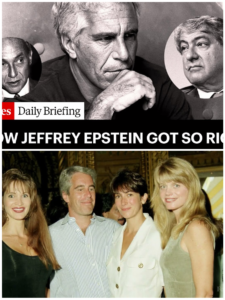
Epstein rose quickly at Bear Stearns, becoming a limited partner by 1980, specializing in tax strategies for wealthy clients. He left in 1981 to found his own firm, claiming to manage money exclusively for billionaires.
The turning point came in the late 1980s with Leslie Wexner, founder of L Brands (Victoria’s Secret, Bath & Body Works). Wexner granted Epstein power of attorney in 1991, an extraordinary trust allowing him to handle finances, properties, and investments. Epstein earned an estimated $200 million in fees from Wexner alone, plus $170 million from Leon Black, totaling around $490 million in management fees from 1999-2018, per Forbes analyses.
Relocating operations to the U.S. Virgin Islands, Epstein’s firms benefited from tax incentives, saving hundreds of millions through exemptions on income and excise taxes. This shielded wealth funded extravagance: a $77 million Manhattan mansion (transferred from Wexner), Palm Beach estate, New Mexico ranch, private islands including Little St. James, and a Boeing 727 jet.
Epstein’s opaque empire enabled elite access while concealing darker activities. His fortune, built on one key relationship and aggressive tax planning, remains shrouded in questions even after his 2019 death.
Leave a Reply